Labor lessons from former coal country

Some Motivation from West Virginia. The battle hardened state has a long history of labor struggle. This bit comes from Krystal Ball at the TheHill.com All eyes on

Could this be the moment the labor movement has been waiting for?

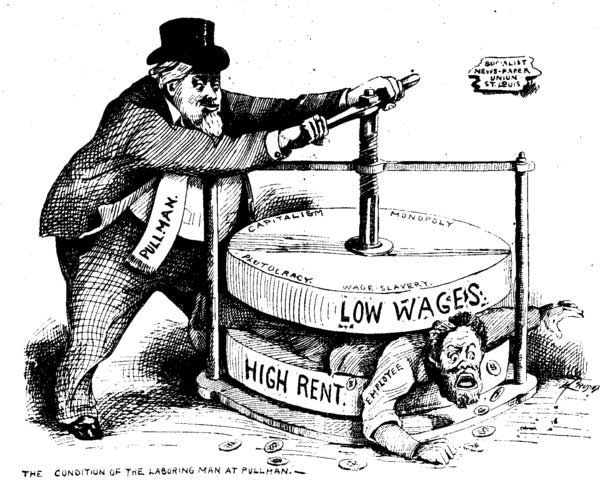
pullman

Link Here

It’s been a rough couple of decades for the national labor movement. Unions have been subjected to a full blown assault by the GOP, eroded by new work arrangements and all but abandoned by Democrats. Major newspapers no longer employ labor reporters, 28 states have undermined unions with so-called right-to-work laws, the Trump administration has decimated the National Labor Relations Board, and every year brings another grim statistic about how union membership has fallen.

With this set of facts piling up, plenty of people have decided unions are now irrelevant and left the movement for dead. Turns out, though, that West Virginia didn’t get the memo.

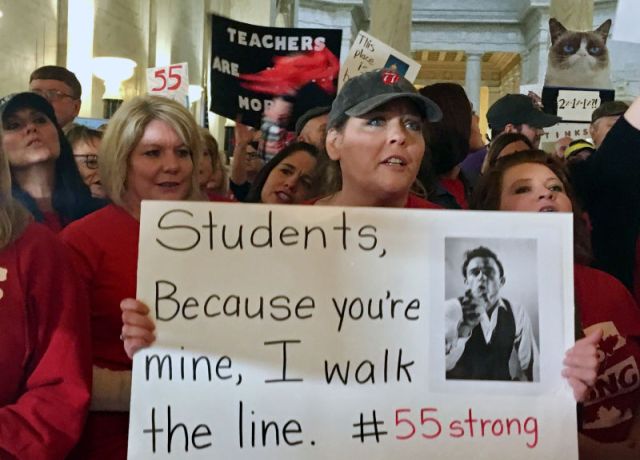
Teachers, school service personnel and other public employees in the Mountain State are on the verge of a historic statewide walkout over pay that’s near the worst in the country. Over the past few weeks, these workers have staged local walkouts, flooded town halls, and descended by the thousands on the state capital in Charleston. Today, teachers will walk out of schools in at least three more counties, and on Saturday they’ll rally in a massive protest at the Capitol building in what is expected to be their largest action to date.


With no sign that the Republican-dominated legislature is going to accede to the teachers’ demands for a decent wage, the only avenue left is a coordinated statewide walkout. According to Dale Lee, president of the West Virginia Education Association, the state’s largest teachers union: “Unless things change, we’re headed toward a work action.”

It’s hard to overstate just what a dramatic scene this will be. When thousands of teachers walk out of West Virginia schools, they’ll be bucking a national trend in a big way. Last year was the second lowest year ever recorded for large-scale strikes. In the entire country for the entire year, there were only 7 strikes involving more than 1,000 workers.

If you’re surprised to see a resurgence in progressive radical action coming from West Virginia, then it’s time you toss out your old stereotypes of West Virginians as an endlessly trod-upon people who don’t understand their own self-interest and reflexively back Republicans. You may also want to revisit your history.

West Virginia was a cradle of militant unionism and the site of some of the most storied, important battles between labor and management. In fact, if you’ve ever called someone a “redneck” or been called one yourself, you can trace that proud pejorative back to one of the bloodiest battles between labor and management to occur in our nation’s history. In the Battle of Blair Mountain, miners literally fought against management and government for their right to organize and to earn cash instead of scrip and to shop outside of company stores. In order to easily identify their brothers in arms, the miners wrapped red bandanas around their necks.

You might also be surprised to learn that those rednecks were composed of whites, black migrants from the South and new European immigrants. They spoke different languages, came from different cultures, but their red bandanas stood as a sign of cross-racial, working-class solidarity.

In other words, West Virginia may be the perfect place for workers to once again disregard the rules meant to keep them in their place. The perfect place for workers to demand more from a system that has been systematically rigged to deliver for business and the politically connected at the expense of working people in every community. The perfect place to lead a vanguard of progressive activism that just might be the jolt the entire national labor movement needs.

These modern-day rednecks are ready to fight.

June_30_1917 cr

Krystal Ball is president of The People’s House Project, which recruits Democratic candidates in Republican-held congressional districts of the Midwest and Appalachia. A former candidate for Congress in Virginia and host on MSNBC’s “The Cycle,” she is a video host for the soon-to-be-launched Hill.TV project. Follow her on Twitter @krystalball.

7 more days…Travel to soothe the soul

2018 so far, has packed in some monumental change. The conclusions and insight apparent within the first few months have been astounding. The upheaval, transitions, and even betrayal have left me wounded and a feeling like an old tire. Where to go from here? Clarity is needed, and when dealing with uncertainty, clarity becomes rare.

This post is going to be a personal one, but with a twist. I believe travel can be a kind of therapy. The same vein I wrote about previously, upon discovering the glory of solo travel,  Baltic Success on the Solo Road  Showed me how cathartic and solidifying travel can be. I was scattered and disheveled.  That trip taught me a new dimension to self reliance, and embracing the unknown, and its time for me to re imagine those lessons.

p8cvVmW

Timing is an odd beast. Tricky, yet at times serendipitous. As i’m dealing with personal drastic and radical change, today’s date reminds me that now we are 7 days away from heading back over the pond.  Timing indeed.

This story goes back years. Ill keep it to the condensed version. I have a near and dear family friend, who retired from teaching a few years back. Shortly before retirement, over our customary Friday beverages, I implored him to join me on an excursion. Having taught history for decades, I knew he would marvel at so many destinations. The food, the wine, architecture and history.  I also had an additional angle. I could not travel with my own father, as since his remarriage he apologetically informed me that he simply would never be allowed to go with me. His new wife forbade it. If he was going to travel, it would have to be with her. (and of course, they promptly never went anywhere)  That was a bitter pill to swallow. That dynamic frayed my parental relationship permanently. The politics and savagery of divorce, and the inherent power struggles native to integrating new relationships left me in an odd position. I have always appreciated the “old guy hindsight” the anecdotes, and the comparisons of days gone past. I’ve got years of formal education, a handful of degrees, and a bit of travel experience, but the older I get, I realize how little I know. I’ve come to embrace the fact that I need to talk less, and listen more.

fullsizerender

So, after imploring my family friend for a few years, he finally went and renewed his passport. Now we were getting somewhere! (his last passport expired in 1977). Late last year, a cheap ticket popped up for Amsterdam. This was it. Time to book, to take the plunge and not look back.  His daughter, whom I grew up with decided there was no way she was sitting this one out and joined in on the adventure. We were now a trifecta heading to The Dutch capital.

Our plan?

This year happens to be the 100 year anniversary of the end of WWI. We have decided to rent a car (diesel, and equipped with a 6sp) to rip across the Netherlands, Belgium, and France. Hitting The major battle fields en route to Normandy. The Somme in particular. What is it about the road, saltwater and good friends that proves so lethal to the doldrums?  A stop in Champagne, Bayeux, Lille, and possibly Bruge, should thoroughly enthrall the senses. I am hoping that in the end, the time on the road, the chats, the wine, and the journey will grant me the clarity I need in choosing my path forward.  I hope you are looking forward to dispatches from the road! A new episode of the Gypsy Professor is fast approaching.

img_0552


Why History isn’t just Bollocks

img_8064

I deal with this on a weekly basis. Why study history? Whats the point? This line of questioning goes so far as to suggest that for the community college level students shouldn’t delve into the social sciences or humanities, solely focusing on the trades instead.

I could not disagree more.

History is far from useless.  In essence, history as a craft, or discipline is the ability to argue. As it turns out, you are going to be arguing for the rest of your life. Arguing with/persuading your significant other, your employer, relatives, friends, and ass hats on the internet. The ability to argue may be one the most critical skills you need to develop in this world.

Can you point to an exact economic impact in raw numbers, like you can with say a welding certificate? No. This not equate with an exact dollar per hour quantification. But you can point to the dividends that this skill will reap over the long term. The traditional argument for the social sciences tend toward  creating “well informed citizenry” out of our students, giving them various lenses from which to engage the world around them. As students are bombarded with information from every corner of their life, it is essential that they develop new key literacies to sift and analyze this cascade of information. To nurture what Hemingway famously called “as shockproof a bullshit meter as possible”.

Take a look at the numbers below, they even include graphs!

History Is Not a Useless Major:

Fighting Myths with Data

Paul B. Sturtevant, April 2017

Over the past 20 years, warnings from a variety of sources—from career counselors to administrators to government officials—have convinced many prospective college students (and their parents) that the only safe path to a well-paying job is through a STEM major. Members of the academy—including STEM faculty themselves—have repeatedly challenged assertions that majoring in the humanities is useless. And employers of STEM graduates say that they value skills cultivated in a wide-ranging curriculum.

But the sense persists that the push toward STEM comes at the direct expense of humanities majors; history enrollments have declined sharply since at least 2011. As Julia Brookins reported in the March 2016 issue of Perspectives on History: “The number of history BAs and BSs completed in the United States fell for the third time in four years, this time by 9.1 percent from the previous year, from 34,360 to 31,233 [in 2014].” According to the most recent data, this steep decline has continued, with only 28,157 history majors graduating in 2015 (a decline of 9.8 percent from 2014).

In advising students, talking to parents, and listening to the priorities articulated by state legislatures, we continue to encounter widespread myths about the lives of people who graduate with history BAs. These myths are largely based on misinformation about the prospective lives of those who major in history. They paint life with a degree in history as a wasteland of unemployment and underemployment—that careful study of Asoka’s conquests or the Industrial Revolution leads to a life of “Would you like fries with that?”

A potent way to combat these myths is with concrete data. Thankfully, a massive repository of data, the American Community Survey (ACS), tells us much about the lives of history majors. Conducted by the US Census Bureau each year since 2000, the ACS is a statistical survey of 3.5 million American households. It includes questions on a wide range of topics, from demographic details like age and race/ethnicity to situational data like housing and employment status. Most usefully for us, it also records individuals’ undergraduate majors. These data are then compiled and aggregated into one-, three-, and five-year estimates.

From the ACS, we know that over the years 2010–14, some 29.7 percent of all American adults over 25 completed a bachelor’s degree or higher. Of those, 2.21 percent received a bachelor’s in history or US history. The ACS data offer us a snapshot of these history majors across the country and at different phases of life: from recent graduates to those in retirement.

Overall, the ACS data suggest that the picture for history majors is far brighter than critics of the humanities would have you believe, even those who think the sole purpose of a college degree is to achieve a well-paying job.

Myth 1: History Majors Are Underemployed

One fear is that history degrees do not offer a life of gainful employment or the job security that other careers might. The truth is very different. The ACS found that 4.6 percent of history majors between the ages of 25 and 64 were unemployed at the time they were surveyed. The national average, by comparison, was 7.7 percent. Against all holders of a college degree, however, there was a modest difference: degree-holders overall had 4.1 percent unemployment, half a percentage point lower. While history majors do have a slightly higher unemployment rate, the data show that someone interested in the field should not be deterred; the difference is very slight.

Myth 2: A History Major Does Not Prepare You for Gainful Employment

Fig. 1. Data source: ACS 2010–14 5-year Public Use Microdata Sample (PUMS). Includes individuals who stated they were in full-time employment, between the ages of 25 and 64, had achieved a bachelor’s degree or higher, and had either history or US history as the field of study for their bachelor’s degree.

Fig. 1. Data source: ACS 2010–14 5-year Public Use Microdata Sample (PUMS). Includes individuals who stated they were in full-time employment, between the ages of 25 and 64, had achieved a bachelor’s degree or higher, and had either history or US history as the field of study for their bachelor’s degree.

Most myths begin with a kernel of truth that is then warped beyond recognition. The idea that a history degree doesn’t lead directly into a profession is true only for students who expect to become professional historians or to work in a closely related occupation. The vast majority of history majors, of course, do not become professional historians; according to the ACS, only 4.5 percent of history majors become educators at a postsecondary level (that is, mostly college professors). The proportion who become museum professionals—0.5 percent of the total—is a very small slice of the overall pie as well.

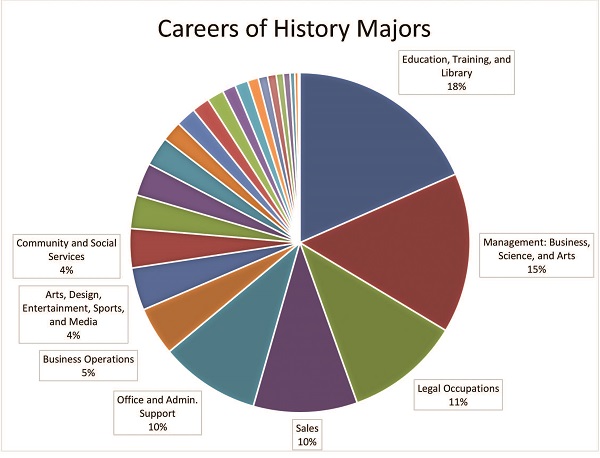
But the ACS data imply that many history majors do not expect to become historians and that they find meaningful careers in a wide range of fields. A history degree provides a broad skillset that has ensured that history majors are employed in almost every walk of life, with some notable trends (see fig. 1).

Fig. 2. Data source: ACS 2010–14 5-year Public Use Microdata Sample (PUMS). Includes individuals who stated they were in full-time employment, between the ages of 25 and 64, had achieved a bachelor’s degree or higher, and had either history or US history as the field of study for their bachelor’s degree.

History majors seem particularly well-­prepared for, and attracted to, certain careers. Nearly one in five goes into education—just over half as primary-, middle-, and high-school teachers. Another 15 percent enter management positions in business, and 11 percent go into the legal professions (most becoming lawyers). The “fries” myth is definitely not backed up by the data; only 1.7 percent of history majors work in food preparation, compared to 5 percent of the overall population.

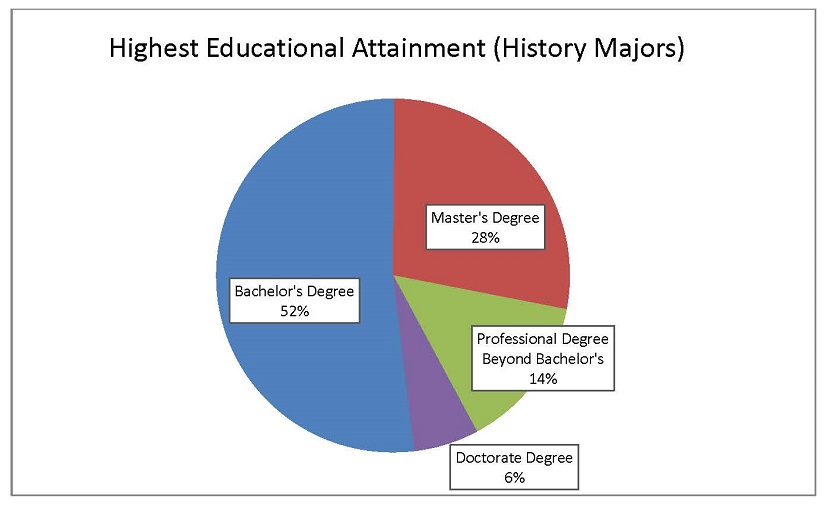
It’s important to note that nearly half of the history majors identified by the ACS went on to graduate school (see fig. 2)—a much higher percentage than the national average (37 percent) and higher than majors in English (45 percent) and the liberal arts (26 percent). This might be because law, management, and education require advanced study. It could also mean that students interested in careers that require graduate training see a history major as a springboard. Likely it is a combination of the two. But knowing this, history departments must understand that it is imperative that they prepare majors for graduate school and offer guidance in educational and career choices.

Myth 3: History Majors Are Underpaid

Fig. 3. Data source: American Academy of Arts and Sciences Humanities Indicators, table III-4a. Available at http://www.humanitiesindicators.org/content/indicatordoc.aspx?i=287.

Again, we start with a kernel of truth. The American Academy of Arts and Sciences Humanities Indicators project released an analysis of ACS data showing that those with degrees in the humanities earn less (in terms of median income) than those with degrees in engineering, health care, business, and the sciences (see fig. 3).

Fig. 4. Data source: American Academy of Arts and Sciences Humanities Indicators, table III-4a. Available at http://www.humanitiesindicators.org/content/indicatordoc.aspx?i=287. Methodological note: The ACS survey records undergraduate major by a free-response text block, with no apparent guidance on how to represent a person’s degree. As a result, the number who reported their major as “history” may also include some who studied US history. The overall number of US history majors reported in the ACS is very low, to such a degree that they may make statistical analyses problematic. It is for these reasons that I combine the US history and history majors in my analysis, though the American Academy of Arts and Sciences does not.

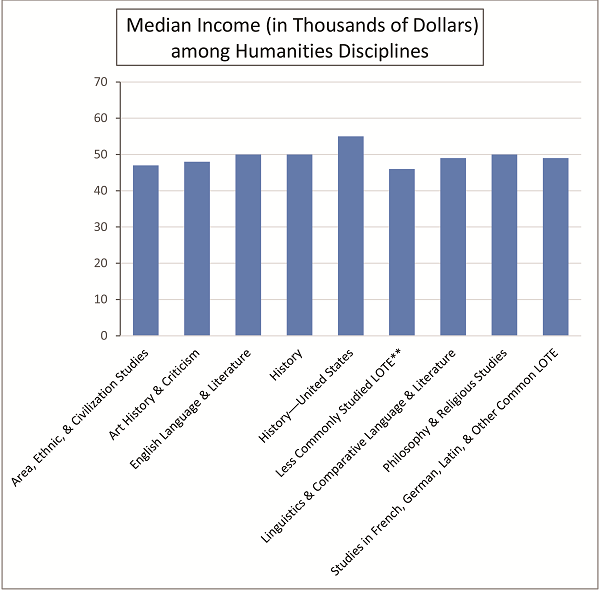
Part of this is based more on field than on level of achievement; the work of engineers and computer programmers is better remunerated than that of, for example, elementary school teachers—even though our society demands good teachers. But history fares well in terms of compensation when compared to other humanities majors. The differences in median income among the humanities disciplines are not significant; the disparity between highest- and lowest-­paid humanities majors in the workforce is only a few thousand dollars (see fig. 4).

Data suggest prospects for potential history majors are good, but history departments must offer guidance in career and graduate school choices.

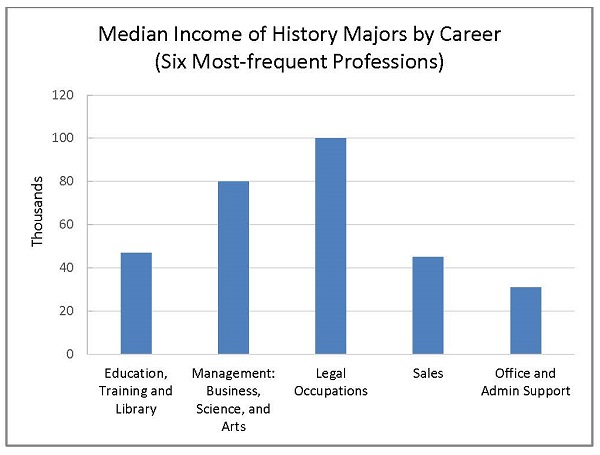
Because of the diversity of careers that humanities majors—particularly history majors—go into, there is a wider-than-­average distribution of incomes based upon field of work (see fig. 5). As in the general workforce, it is the occupation of college graduates in the humanities, rather than their undergraduate major, that accounts for differences in income. For history majors between the ages of 25 and 64 who are neither unemployed nor out of the workforce, the median income is currently $60,000 per year. But for those in managerial positions, the median is $80,000. For those in the legal occupations, the median is $100,000. But for those in education, it is $47,000, and for those who go into community and social services, the median is $45,000.

Fig. 5. Data source: ACS 2010–14 5-year Public Use Microdata Sample (PUMS). Includes individuals who stated they were in full-time employment, between the ages of 25 and 64, had achieved a bachelor’s degree or higher, and had either history or US history as the field of study for their bachelor’s degree.

In short, it is not that history majors are underpaid. It is that the diverse range of occupations that a history degree prepares them for includes several important, but vastly undervalued, public service careers. If the only consideration when choosing a major is whether you will be earning six figures by the age of 30, then history may not be the best field. But for students who are inspired by work in which the greatest rewards may not necessarily be financial, a history major remains an excellent option.

The ACS data shed fascinating light on some of the myths about life with a history degree. Majoring in history does not doom a graduate to a life of unemployment or under­employment. In fact, history majors go on to become much better educated than the average person, filling roles in a wider range of careers than holders of many other degrees. The worst that can be said of this situation is that many of those careers are socially undervalued. But that does not mean that a degree in history is any less valuable.

Methodological note: All ACS data cited in this article include only those individuals between the ages of 25 and 64 who were in full-time employment, who achieved a bachelor’s degree or higher, and who stated that their field of study for their bachelor’s degree was either history or US history. All data were taken from the ACS’s 2010–14 5-year Public Use Microdata Sample (PUMS). Data on the number of history bachelors’ degrees awarded in 2015 were gleaned from the annual National Center for Education Statistics via the NSF’s WebCASPAR system at https://ncsesdata.nsf.gov/webcaspar.

Paul B. Sturtevant is a medievalist, social scientist, and public historian. He received a PhD in medieval studies from the University of Leeds and is a social science analyst at the Smithsonian Institution, as well as editor in chief of The Public Medievalisthttp://www.publicmedievalist.com/.

img_8076

Monday Musings…a day late.

Today has been a Tom Petty kind of day. I miss that guy.

Fat Tuesday is here, its cold outside, and there are Paczki near at hand. Tuesdays may be the most difficult day of the week this semester. The previous evenings night class ends at 9:30. post the long slog of Monday, I am left to stumble home, a bit numb and wind down before bed. The true endurance is needed for the early morning rise on Tuesday.

How do you stay motivated? Do you look at flights? Pictures from previous trips?

img_9922

After much thought I’ve come to realize that the tricky Motivation beast is not a bottomless well, but a battery that has to be kept fully charged, and maintained. While the idea of travel is almost always inspiring, sometimes life gets in the way and then suddenly, your focus has shifted, you’re distracted, your limited supply of fucks have been redirected elsewhere. those are precious fucks, and you have a finite supply from day to day, so keep those eyes on the prize.

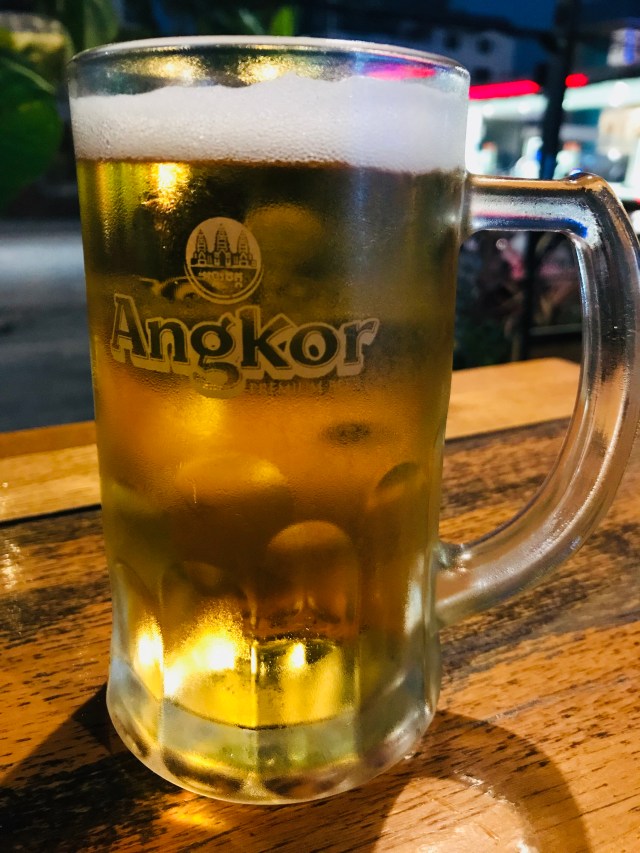
I feel as if I’ve had my ass kicked this semester. A month through South East Asia,Holy shit. Angkor Wat. then An incredible and yet taxing time in Haiti, The End of the World…Caribbean style. only to land  back to a full time grind a day later. The day job, running a small business, office hours, grading, the side hustle, writing, reading… who in the hell has time to run down their dreams?!? You know the whole damn point to all of it? I can get easily distracted, and these last few days have been a low point of frustration and exhaustion.

Motivation is important, and I want to discuss it shortly.

When it comes to traveling;


3 Quick bits

Research Destinations — Google them, read blogs about them. Here, and all over the web.  These are the initial steps, build the foundation, and eventually you’ll get there. It may sound wankerish, but by always keeping travel on my mind, I have a mental place to focus on, don’t just zone out, keep those eyes on the prize. Be mindful about what it is you want. Don’t worry, there will plenty of people to shit on your grand ideas. Friends and family who have never left the country rarely shy from giving you their input about not going there…because, in fact they have never gone anywhere. This is a GREAT sign. People bag on things they don’t understand. Just worry about getting there. You know when you encounter someone who is actively keeping their dreams alive. They are typically supportive of your endevours, positive and cool to interact with. Those that let their dreams die a twisted death are past even cynical, and their jaded nature finds a way to alter almost every aspect of conversation with them. People will either inspire you, or drain you. Chose them wisely.  I’m constantly researching destinations online, reading news from overseas, and generally getting to know the world better. Refining my “short list”.  The more I learn and absorb about various places, through history, culture, food, etc…Im left energized with a feeling of “So many places, so few years”.

Devote time – Stuff always seems to come up, doesn’t it? Life happens. Life happens fast. Blink and you will be in a long term relationship, picking out matching leisure wear, yelling at kids to stay off your grass. Guess who didn’t climb that goddamn mountain?  Look, nothing awesome comes easy. I spend roughly an hour per day looking at airfare and options for adventure. My dad, on the other hand reads the local obits every morning. (see the difference here)? Instead of wasting time on toxic people, or drowning in the mental masturbation of social media take that time back. Devote that shit to planning your trip. Make it a consistent part of your schedule and develop a habit so that it doesn’t feel like a task you “have” to do; it becomes just something you do automatically. Book a flight. Just do it. Go. You might be shocked whats waiting for you.

Read, Read…Read! — Reading about other travelers’ adventures can show you that it is easier to travel than you thought, provide advice and tips on the art of travel, and teach you about places you’ve never heard of. Start with the history of a particular region, then move onto some of the literature. Your experience will pay off in dividends.  And of course you can read about some of it here. Shameless plug.  Scared of Albania? Read about peoples experience there. I’m sure there are dozens of blogs dedicated to everything from the art/music scene, hidden beaches, solo female travel, vegan food options, etc. You go with a glimpse of history, end up with a talented musician on a secluded beach…how much better than some bullshit Caribbean cruise would that be? Perhaps One day you’ll get sick of living vicariously through others, and you will be all set to go make your own blooper/highlight reel.

This, as well as hanging out on travel forums will also help you tune out the ass hats that tell you “you can do that”. Life is too damn short for that shit. Like i said before, you chose your company. chose wisely.

31153_580223422538_208700466_33627754_2461612_n

Leave some love

One week in; Sober February

There is something about a bright Saturday morning.

cafe ruin

A bright beautiful morning, waking up organically without an alarm, pondering the possibilities of the day…and not dying from a fucking hangover. Lets be honest, hitting it hard on Friday night…post the age of 25 hurts the next day. Periodically I switch it up, and take a month off from alcohol. Every February, and sometimes a bit in the fall. Turns out, makes a world of difference on weekend mornings, and saves cash for other pursuits… such as travelling the world. Below are some of the benefits included from taking a brief break from booze.

From Amy Guttman

NPR Link

As New Year’s resolutions go, cutting back on food and drink are right at the top of the list. And while those vowing to change their eating habits may cut the carbohydrates or say a sweet goodbye to sugar, for regular drinkers, the tradition may involve what’s known as a “dry January”: giving up booze for a month.

But could such a short-term breakup with alcohol really impart any measurable health benefits?

The staff at the magazine New Scientist decided to find out, using themselves as guinea pigs. The findings of their small but intriguing experiment suggest the answer is a resounding yes.

The magazine is based in the U.K., where the dry January concept has been gaining traction, thanks to an annual campaign by the charity Alcohol Concern. In late 2013, 14 healthy New Scientist employees filled out lifestyle questionnaires, underwent ultrasounds and gave blood samples. Then, 10 of them gave up alcohol for five weeks, while four of them continued drinking normally.

“Normal” drinking for the New Scientist group ranged from 10 units of alcohol per week — the equivalent of about eight 12-ounce bottles of regular-strength beer — to 80 units, or 64 beers, per week. Those numbers may seem high, but in Britain, where drinking is a national pastime, the group’s supervising doctor told them none were problem drinkers. (Incidentally, Britain’s National Health Service recommends no more than 14 to 21 alcohol units per week.

 The results of these changes were significant enough to make you put down your pint and take notice.

Dr. Rajiv Jalan, a liver specialist at the Institute for Liver and Digestive Health at University College London, analyzed the findings. They revealed that among those in the study who gave up drinking, liver fat, a precursor to liver damage, fell by at least 15 percent. For some, it fell almost 20 percent.

Abstainers also saw their blood glucose levels — a key factor in determining diabetes risk — fall by an average of 16 percent. It was the first study to show such an immediate drop from going dry, Dr. James Ferguson, a liver specialist at Queen Elizabeth Hospital Birmingham in England, told us last year.

Overall, the evidence is convincing but not all that surprising, said Ferguson, who was not involved in the experiment.

“If you take time off from alcohol, it’s going to be beneficial for your liver from the reduction of fat,” he told The Salt. “People always forget the amount of calories in alcohol, so if you take a month off, and you usually consume 20 units, you’re going to lose weight and fat. It’s a massive reduction in calories. ”

The main causes of excessive fat in the liver are obesity and excessive alcohol consumption. Alcohol changes the way the liver processes fat, resulting in more fat cells that can cause inflammation, leading to liver disease.

But Ferguson warned that a dry January could trigger the same sort of negative boomerang effect as do restrictive diets: First you abstain, then you binge to make up for it. He questioned whether a dry January leads to a wetter-than-normal February.

Beyond that, there’s the question of whether and how much these improvements last in the long run. Ferguson offered a sobering view.

“I don’t think taking one month a year off alcohol makes any difference,” he says. “It’s more important to cut back generally.”

IMG_8730

Just a stalker and his dog; Strays of…Chernobyl!

IMG_3509

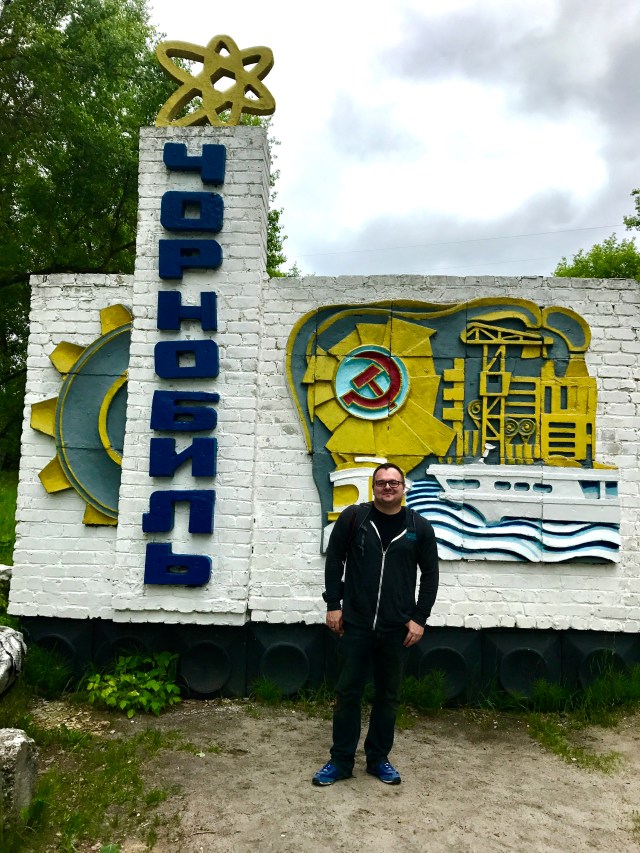
I have been plotting and casually building my multi part Chernobyl/Ukraine piece for some time. Pripyat for me, is the original “bucket list” destination. My friends in Kiev recently had the opportunity to work with the Guardian UK on an interesting angle. At this point, the Chernobyl exclusion zone is essentially Europe’s largest nature preserve. Studies have been done on all manner of animals there. This time though the star of the story…the stray dogs of “the zone”.  I am thrilled to see this, and cant wait to dig into my notebooks and photos to build my Ukraine story.  See below for the article, with a few photos of my own thrown in. Just a teaser for a larger project coming soon.


IMG_3531

Please see the story here as well Chernobyl strays


Hundreds of stray dogs have learned to survive in the woods around the exclusion zone – mainly descendants of those left behind after the nuclear disaster, when residents were banned from taking their beloved pets to safety

by Julie McDowall

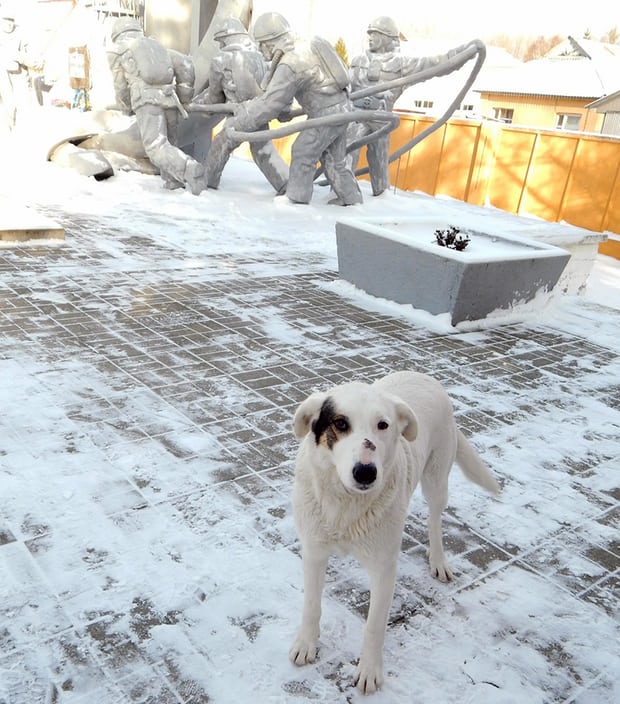
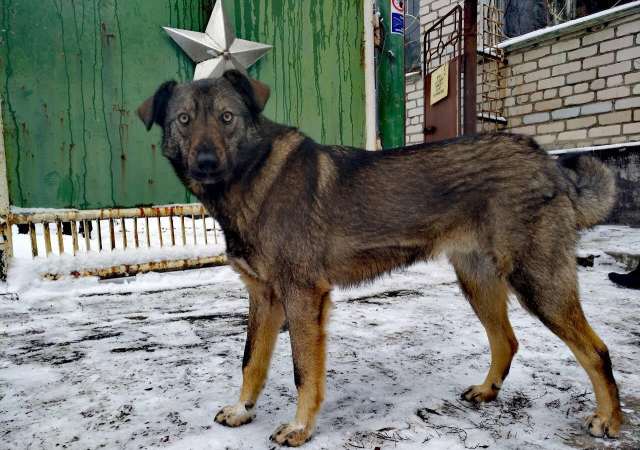
Igor, who, it turns out, is very familiar with the dog, throws a few snowballs, which it tries to catch and chew. “This is Tarzan,” says Igor. “He’s a stray who lives in the exclusion zone. His mum was killed by a wolf, so the guides look out for him, chuck a few sticks, play a few games. He’s only a baby, really …”

3072
Pinterest
 The abandoned dogs at Chernobyl endure harsh Ukrainian winters. Photograph: Courtesy of Solo East

Tarzan isn’t alone. There are approximately 300 stray dogs in the 2,600km² zone. They live among the moose and lynx, the hares and wolves that have also found a home here. But while the Mongolian horses and Belarusian bears were recently introduced to the area, and other animals have come in as opportunists, the dogs are native.

After the Chernobyl disaster in 1986, Pripyat and the surrounding villages were abandoned, and residents were not allowed to take their pets to safety. Chernobyl Prayer, a devastating oral history of the period, tells of “dogs howling, trying to get on the buses. Mongrels, alsatians. The soldiers were pushing them out again, kicking them. They ran after the buses for ages.” Heartbroken families pinned notes to their doors: “Don’t kill our Zhulka. She’s a good dog.” There was no mercy. Squads were sent in to shoot the animals. But some survived and it is mainly their descendants that populate the zone.

1711
Pinterest
 The dogs often carry increased levels of radiation in their fur and have a shortened life expectancy. Photograph: Courtesy of Solo East

Life is not easy for the Chernobyl strays. Not only must they endure harsh Ukrainian winters with no proper shelter, but they often carry increased levels of radiation in their fur and have a shortened life expectancy. Few live beyond the age of six.

But it’s not all bad news. The dogs that live near the zone’s checkpoints have little huts made for them by the guards, and some are wise enough to congregate near the local cafe, having learned that a human presence equals food. These canine gangs act as unofficial Chernobyl mascots, there to greet visitors who stop at Cafe Desyatka for some borscht.

Nadezhda Starodub, a guide with the Chernobyl tour specialist Solo East, says the visitors (there are no “tourists” in the zone) love the dogs. “Most of the time people find them cute, but some think they might be contaminated and so avoid touching the dogs.” There are no rules that forbid a visitor from handling them, but Nadezhda asks her charges to exercise the same common sense they would when approaching any stray. “Some guides are afraid of complaints,” she says, “so they try to avoid the dogs to stay on the safe side. But I love them.”

1280
Pinterest
 The strays are helped by the Clean Futures Fund, which has set up veterinary clinics in the area. Photograph: Courtesy of Solo East

While the dogs get some food and play from the visitors, their health needs are met by Clean Futures Fund, a US non-profit organisation that helps communities affected by industrial accidents, which has set up three veterinary clinics in the area, including one inside the Chernobyl plant. The clinics treat emergencies and issue vaccinations against rabies, parvovirus, distemper and hepatitis. They are also neutering the dogs. Lucas Hixson, the fund’s co-founder, says: “I don’t think we’ll ever get zero dogs in the exclusion zone but we want to get the population down to a manageable size so we can feed and provide long-term care for them.” This makes Chernobyl safer for the dogs, but also for the workers and visitors.

The Chernobyl plant has recently been sealed under a new “sarcophagus” designed and built by a multinational group of experts, and similar cooperation can be seen with the dogs. In the woods behind Chernobyl I look again at yellow-eyed Tarzan and see, not a wild animal, but a playful example of global kindness and cooperation.

3599
Pinterest
 ‘We want to get the population down to a manageable size so we can feed and provide long-term care for them.’ Photograph: Courtesy of Solo East

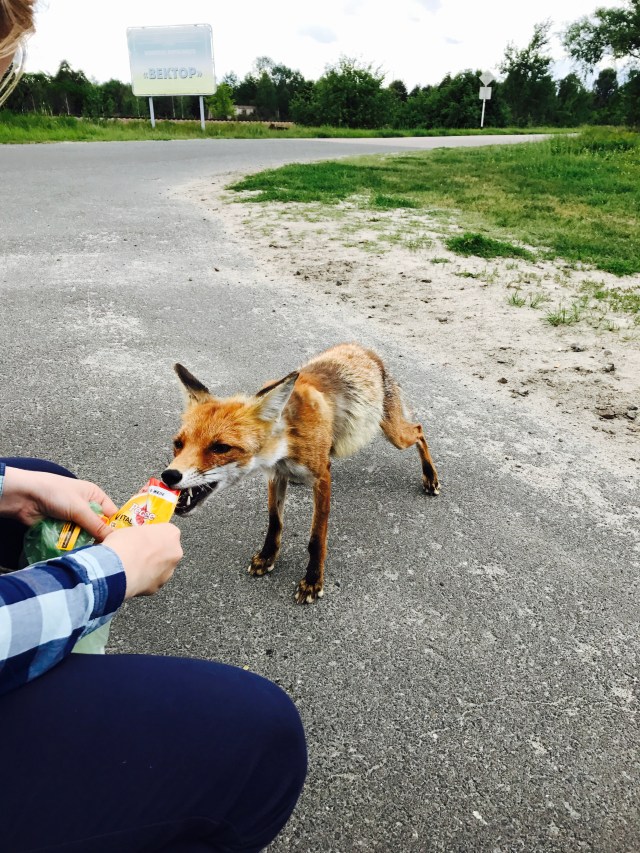
Ive also added a few pics of my own from my dual trips into the Zone. IMG_3515The strays make up a vibrant element while exploring the abandoned city. IMG_3652The occasional fox is willing to be friends as well. IMG_3607Just a stalker and his dog.

Gear Review: The Kelty 44L Pack

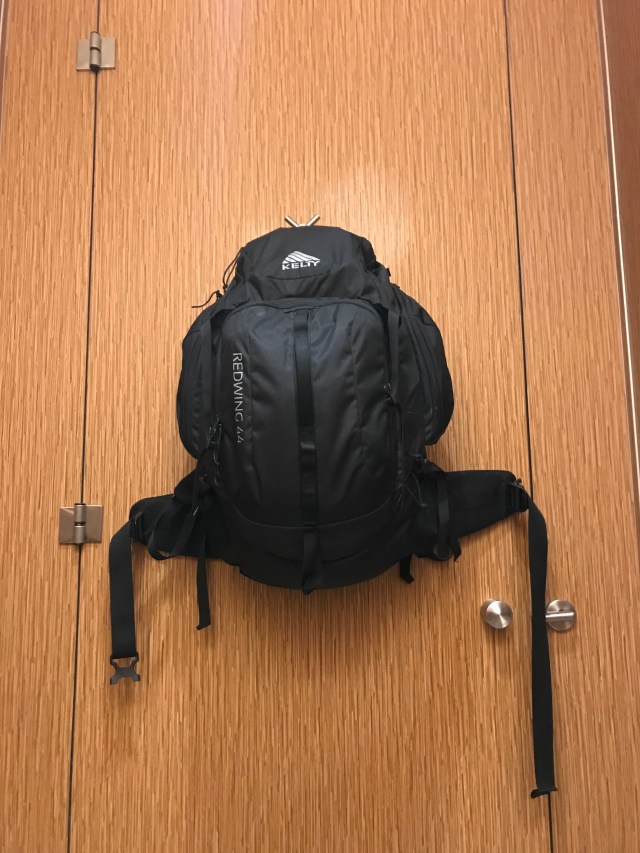
Here she is. The  Kelty Redwing 44 L Backpack 2013 – Black. I’ve been traveling for a few years with this pack as my mid range option. I’ve made this beast work for numerous  month long trips to both Asia, as well as Europe. I also use this pack for my shorter 10-20 day excursions as well. From Cabo, to Bangkok the Kelty 44 Redwing gets it done. Please use the above link to purchase.

Lets take a look at the specs.

Features

Specifications

    • Dual side pockets
    • Front pocket with organization
    • Front Stash pocket with closure hook
    • Top stash pocket
    • Side compression straps
    • Water bottle pockets
    • Dual use Laptop / Hydration Sleeve
    • Hide-Away Daisy Chain and Handle
    • Ice axe/trekking pole loops
    • Key fob
    • HDPE frame sheet
    • Hex Mesh back panel, shoulder straps and waist belt
    • Padded and ventilating back panel
    • Sternum strap
    • Load lifter straps
    • Single LightBeam aluminum stay
    • Removable waist belt
    • Volume: 2700 in3 / 44 L
    • Frame Type:  Internal
    • Weight:  2 lbs 10 oz / 1.2 kg
    • Torso Fit Range:  14.5 – 18.5 in / 37 – 47 cm
    • Dimensions: 25 x 15 x 12 in / 64 x 38 x 30 cm
    Body Fabric: 
    Poly 420D Small Back StaffordReinforcement Fabric: 
    Poly 75x150D Tasser Coal

    Frame Material: 
    Aluminum + HDPE

IMG_7650

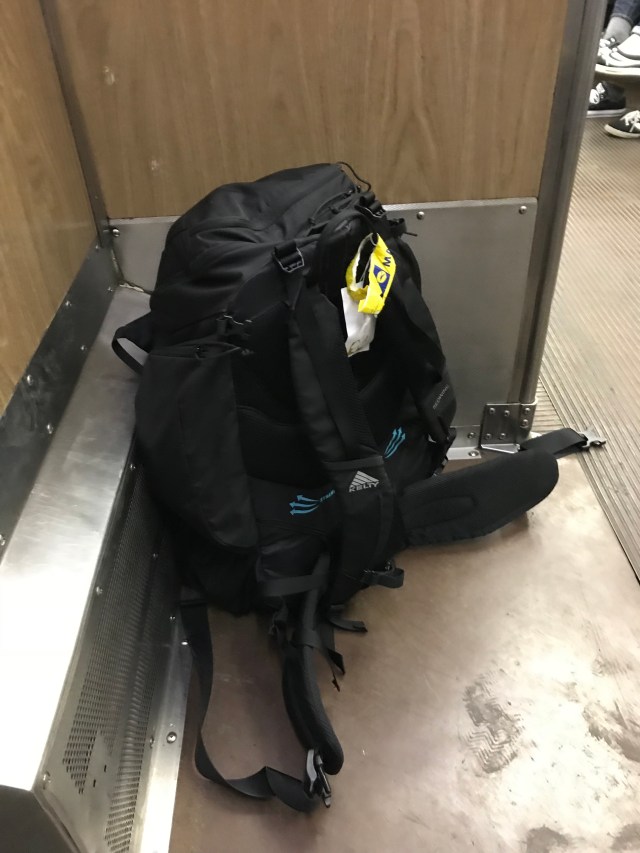
fresh with a crumpled Ukrainian air tag, on the floor of the Chicago L train from the airport to the loop.

IMG_6958 This bag has served as a carry on for me with numerous regional carriers, LCC’s and everything in between. I’ve never had a problem using this pack as a carry on. 2016 I logged 225k miles in the air or so, and use the Kelty as my “one bag” option.


IMG_4164

Here is a handy video of the features.

I have loved this pack, and its versatile features. The zipper design means I dont have to use it as a top load only, and thus smashing all of my stuff into the bottom. I have traveled with laptops, tablets, etc, and this is a superb design for the digital nomad, and mobile professional.

Kelty Redwing 44 L Backpack 2013 – Black

Please leave a comment with any questions or comments. Thank you!

Monday Mornin’

Monday Morning comes at you hard some weeks. I’ve noticed that for some of us, immersed in the digital age, the lines between the work week and the weekend have a tendency to blur quite a bit. I wanted to share a slice of motivation, in the form a brief TED talk. Kick Monday motivation square in the pants.

For those who are constantly online and working even on the weekends, stress is an all too common a feeling. But to feel so at the start of a fresh week is not likely to do much for your productivity. However, Kelly McGonigal, a health psychologist, in this talk, shares her findings on how we can (and need to) re-calibrate our minds to view stress contrarily, different than our current notion/belief of it is as a life-threatening disease of sorts. Kelly talks about perspective changes, how one can try to see stress as a sign of action-readiness. About how we can view our stress responses as helpful and not harmful. Her suggestions on how we can befriend-stress are simple and worth giving a try.

IMG_0246

What do you think? Any methods you might recommend? Leave some love.

An Open Letter to the Interim President, Provost, and Board of Trustees of Michigan State University

Michigan_State_University_seal.svg

From the MSU Faculty, As found here https://msufic.wordpress.com/  (Follow the link to add your name to the list)

AN OPEN LETTER TO THE INTERIM PRESIDENT, PROVOST, AND BOARD OF TRUSTEES OF MICHIGAN STATE UNIVERSITY


Our Observations Concerning Michigan State University’s Climate

We the undersigned Faculty are horrified by Nassar’s crimes and compelled by the growing sense that Michigan State University (MSU) officials have remained silent in the face of sexual violence against women on campus. Our hearts go out to the survivors, those courageous young women who have stood up in court, given statements and exposed, not only Nassar, but also the failures of the University to respond to their reports of abuse.

There are certainly many more survivors of abuse on campus whose voices, however, have not been heard or whose reports have been disregarded.  The Nassar scandal has revealed that MSU administrative practices have tolerated and even been complicit with multiple forms of abuse, all the while claiming to put student interests first.

It is long past time to address the breadth and depth of our institutional dysfunction. Merely removing the abusers and replacing those who are ultimately responsible for institutional failures is not a satisfactory response. The entire culture of the university must be fundamentally reordered and remade. In this spirit, we present this list of demands that will help begin the process of addressing the past crimes and administrative failures and moving MSU towards a future in which sexual violence will not be tolerated on campus.

Regarding Sexual Abuse

  1. All new Board of Trustees members must have demonstrable deep familiarity with issues surrounding sexual assault and rape culture and other forms of abuse that are common inside a large institution.
  2. The next MSU president must have demonstrable deep familiarity with issues surrounding sexual assault and rape culture and other forms of abuse that are common inside a large institution.
  3. There must be transparency about steps taken to address sexual assault on the MSU campus.
  4. There must be transparency about steps taken to make the MSU administration accountable for failure to respond adequately to sexual assault.
  5. All people directly involved in covering up these sexual assaults must be immediately suspended.
  6. We must create a dedicated Sexual Assault Center with counselors and budget for advocacy and activities, and increase the number of sexual assault counselors after a series of exit interviews with those counselors who have left in protest.

Regarding Providing a Forum for Discussion of this Crisis and Reestablishing Trust between Members of the MSU Community

  1. We should cancel all classes and dedicate an entire day to campus discussion.
  2. All coaches must face the MSU faculty and answer questions in an open meeting.
  3. There must be a Town Hall meeting for students with the interim President, his advisors, the Provost and the entire Board of Trustees.
  4. There must be a Town Hall meeting for faculty with the interim President, his advisors, the Provost and the entire Board of Trustees.

Regarding Governance and Reorganization

  1. After the current Board of Trustees meets with the students and faculty, we expect they will resign or be impeached.
  2. MSU’s Faculty Governance structure is an aberration. Our Faculty Governance must mirror the autonomy given to faculty elsewhere throughout this nation.  For some background and suggestions, we refer you to the Report of the Ad Hoc Committee on Faculty Voice dated April 22, 2005 which was never seriously implemented.
  3. We wish to know the criteria used by the Board of Trustees to select Acting and Interim Presidents.
  4. We wish to have a list of those in academic HR who knew about the Nassar and other sexual assaults and when they became aware of these incidents.
  5. The new Board of Trustees must include in its list of primary responsibilities regaining the trust of the Faculty.
  6. New members of the Board of Trustees must have demonstrated interest in the academic mission of the university, not athletics, and must be appointed for a limited transition period until elections can be held.
  7. The process of selecting a new President must be totally transparent. We remind everyone that Lou Anna Simon was chosen without a national search and hired as the result of a closed door Board of Trustees meeting.
  8. We wish to know the names of the law firms and insurance firms that have been retained.

Regarding Other forms of Institutionalized Abuse

  1. We must examine the structures of abuse which have been normalized throughout this University and employ only those who are both willing to and capable of resisting the furtherance of such abuse. The mantra which appears in so many of MSU’s official documents regarding racism, sexism, classism, ableism, normative gender roles, etc. must not be a meaningless chant.
  2. We must study the enormous body of scholarly work which enlightens us to how abuse has been institutionalized here.

Regarding Financial and Other Costs to the University

  1. We must be given a written commitment that the faculty will not incur the cost of administrative failure (possibly over 1 billion dollars) in the Nassar case.
  2. We remind everyone that as the majority of students are residents of Michigan, any increase in their tuition is a tax on Michigan residents.

Baltic Success on the Solo Road

Some things work out quite nice as a trifecta. When I began thinking about the importance of traveling alone, I thought of my first time truly taking the plunge, and sharing that story became a necessity. Divided into three parts, this my mini narrative.

As you might recall the two previous chapters are On the Path to Solo Travel

and here: The Silver Lining/Solo Travel Pt2

So, after a crushing defeat, we find glory. (A proper silver lining) This glory is two fold. One of the first aspects is that when it comes to travel, toss those expectations right out the fuckin’ window. Toss em. I’ve known folks who have the most insane itineraries, allocating absolute minutia, building in “15 min break” slots into their schedules. Control wound that tight…is going to lead to a tense, frustrated mess.  No thanks.  Learn to embrace some element of flow and flexibility for a much improved experience.

10339556_10102051174940995_5067463667882006275_n

I had found my ticket, but it was last minute. My Balkan fantasies would be put on hold for a bit, because my only real option was Vilnius Lithuiania…With a 12 hour stop over in Stockholm, Sweden.  This sounded great to me. I was hell bent on embracing this new sense of enlightened adventure. I had completely  transformed my feelings of disappointment and anxiety into ones of wonder and excitement. I was doing this as a personal journey as well as a European adventure. As I mentioned before, this was a starting point of epic proportion. I booked this ticket last minute, and was set to arrive home the night before the fall semester began.  Logistics be damned, lets get on the road!

1521368_10102051220544605_7140692683595848059_n

I made it to Chicago, and boarded my flight. Watched a few movies, and promptly woke up in Sweden. That morning is mostly a blur. I took an incredibly nice, and incredibly expensive train to the city center. Grabbed a pastry and walked the Swedish capital.  Stockholm is clean, efficient and easy to navigate. Swedes are courteous and a bit cold in an appropriate “Nordic” style. 38894251235_5d6da2898c_b

Stockholm was an appetizer. I was here, and I did it solo. after a day of wandering about, meatballs, and viking heritage, I made my way back to the airport, for the propeller powered jump over to Vilnius.


I was only a bit nervous, but mostly excited. I had planned on a few days in Vilnius, then taking a bus to Riga, and then finally onto Tallinn. I had no reservations, no expectations, no damn travelers checks, just my phone and serendipity.

I land, clear customs, and make my way to the ATM for local currency. The person in line ahead of me turns around and says  “Go green”!

I was a bit shocked and tired, so I didn’t immediately grasp his meaning. Pointing to my

t shirt, I realized I was sporting a large Michigan State University Spartan logo.

This guy hailed from Royal Oak, Michigan, and was visiting a friend who had moved to Lithuania. I was stunned.

10615417_10102046333173935_7316687350828337093_n

His local based buddy had a great group of friends and I was soon welcomed with open arms. I found a local boutique hotel in the old town, and  most nights we met for beers and general debauchery.  I absolutely loved it. Vilnius is large enough to have a plethora of activities, and yet small enough to maintain at least a somewhat intimate feeling. I implored  my new comrades to join me for Riga, and we took the party on the road.

10622803_10102041206308215_5562444954248221700_n

Before this trek, I was racked with doubt about logistics, about enjoying that amount of solo time, etc. Mid way through this journey, I had embraced the uncertainty and was never going to look back.

” You live like this, sheltered, in a delicate world, and you believe you are living. Then you read a book… or you take a trip… and you discover that you are not living, that you are hibernating. The symptoms of hibernating are easily detectable: first, restlessness. The second symptom (when hibernating becomes dangerous and might degenerate into death): absence of pleasure. That is all. It appears like an innocuous illness. Monotony, boredom, death. Millions live like this (or die like this) without knowing it. They work in offices. They drive a car. They picnic with their families. They raise children. And then some shock treatment takes place, a person, a book, a song, and it awakens them and saves them from death. Some never awaken.”

This was my moment of awakening. On the long bus trek to Riga, and then onto Tallinn, I had decided. This was the road for me.

984169_10102044981088525_9001491525791223582_n

After Riga my comrades went back to Vilnius, and I went on to Tallinn.  I want to write a more indepth review of these cities, and this post isn’t that. This bit is meant more to discuss the journey.

10603266_10102044975679365_5269915116214462062_n

This ten day journey covering a few thousand miles proved absolutely what I needed. By the time I made it back to Vilnius for the flight home, i was already looking at tickets for winter break. I was going for a long haul month long trek after exams to the Balkans. It was going to a twisted savage affair that would change me again forever after.

1544509_10102034661099865_3943303985046783344_n

Exploring these Baltic streets of the three capitals  in late August has stayed on my mind over the tears. I met so many incredibly friendly and inviting people. I left the region utterly inspired on every level to keep exploring, and never stop wandering this incredible world of ours.