Labor lessons from former coal country

Some Motivation from West Virginia. The battle hardened state has a long history of labor struggle. This bit comes from Krystal Ball at the TheHill.com All eyes on

Could this be the moment the labor movement has been waiting for?

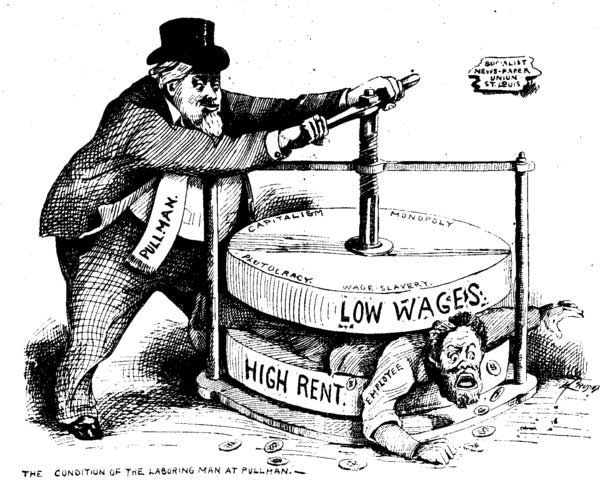
pullman

Link Here

It’s been a rough couple of decades for the national labor movement. Unions have been subjected to a full blown assault by the GOP, eroded by new work arrangements and all but abandoned by Democrats. Major newspapers no longer employ labor reporters, 28 states have undermined unions with so-called right-to-work laws, the Trump administration has decimated the National Labor Relations Board, and every year brings another grim statistic about how union membership has fallen.

With this set of facts piling up, plenty of people have decided unions are now irrelevant and left the movement for dead. Turns out, though, that West Virginia didn’t get the memo.

Teachers, school service personnel and other public employees in the Mountain State are on the verge of a historic statewide walkout over pay that’s near the worst in the country. Over the past few weeks, these workers have staged local walkouts, flooded town halls, and descended by the thousands on the state capital in Charleston. Today, teachers will walk out of schools in at least three more counties, and on Saturday they’ll rally in a massive protest at the Capitol building in what is expected to be their largest action to date.


With no sign that the Republican-dominated legislature is going to accede to the teachers’ demands for a decent wage, the only avenue left is a coordinated statewide walkout. According to Dale Lee, president of the West Virginia Education Association, the state’s largest teachers union: “Unless things change, we’re headed toward a work action.”

It’s hard to overstate just what a dramatic scene this will be. When thousands of teachers walk out of West Virginia schools, they’ll be bucking a national trend in a big way. Last year was the second lowest year ever recorded for large-scale strikes. In the entire country for the entire year, there were only 7 strikes involving more than 1,000 workers.

If you’re surprised to see a resurgence in progressive radical action coming from West Virginia, then it’s time you toss out your old stereotypes of West Virginians as an endlessly trod-upon people who don’t understand their own self-interest and reflexively back Republicans. You may also want to revisit your history.

West Virginia was a cradle of militant unionism and the site of some of the most storied, important battles between labor and management. In fact, if you’ve ever called someone a “redneck” or been called one yourself, you can trace that proud pejorative back to one of the bloodiest battles between labor and management to occur in our nation’s history. In the Battle of Blair Mountain, miners literally fought against management and government for their right to organize and to earn cash instead of scrip and to shop outside of company stores. In order to easily identify their brothers in arms, the miners wrapped red bandanas around their necks.

You might also be surprised to learn that those rednecks were composed of whites, black migrants from the South and new European immigrants. They spoke different languages, came from different cultures, but their red bandanas stood as a sign of cross-racial, working-class solidarity.

In other words, West Virginia may be the perfect place for workers to once again disregard the rules meant to keep them in their place. The perfect place for workers to demand more from a system that has been systematically rigged to deliver for business and the politically connected at the expense of working people in every community. The perfect place to lead a vanguard of progressive activism that just might be the jolt the entire national labor movement needs.

These modern-day rednecks are ready to fight.

June_30_1917 cr

Krystal Ball is president of The People’s House Project, which recruits Democratic candidates in Republican-held congressional districts of the Midwest and Appalachia. A former candidate for Congress in Virginia and host on MSNBC’s “The Cycle,” she is a video host for the soon-to-be-launched Hill.TV project. Follow her on Twitter @krystalball.

7 more days…Travel to soothe the soul

2018 so far, has packed in some monumental change. The conclusions and insight apparent within the first few months have been astounding. The upheaval, transitions, and even betrayal have left me wounded and a feeling like an old tire. Where to go from here? Clarity is needed, and when dealing with uncertainty, clarity becomes rare.

This post is going to be a personal one, but with a twist. I believe travel can be a kind of therapy. The same vein I wrote about previously, upon discovering the glory of solo travel,  Baltic Success on the Solo Road  Showed me how cathartic and solidifying travel can be. I was scattered and disheveled.  That trip taught me a new dimension to self reliance, and embracing the unknown, and its time for me to re imagine those lessons.

p8cvVmW

Timing is an odd beast. Tricky, yet at times serendipitous. As i’m dealing with personal drastic and radical change, today’s date reminds me that now we are 7 days away from heading back over the pond.  Timing indeed.

This story goes back years. Ill keep it to the condensed version. I have a near and dear family friend, who retired from teaching a few years back. Shortly before retirement, over our customary Friday beverages, I implored him to join me on an excursion. Having taught history for decades, I knew he would marvel at so many destinations. The food, the wine, architecture and history.  I also had an additional angle. I could not travel with my own father, as since his remarriage he apologetically informed me that he simply would never be allowed to go with me. His new wife forbade it. If he was going to travel, it would have to be with her. (and of course, they promptly never went anywhere)  That was a bitter pill to swallow. That dynamic frayed my parental relationship permanently. The politics and savagery of divorce, and the inherent power struggles native to integrating new relationships left me in an odd position. I have always appreciated the “old guy hindsight” the anecdotes, and the comparisons of days gone past. I’ve got years of formal education, a handful of degrees, and a bit of travel experience, but the older I get, I realize how little I know. I’ve come to embrace the fact that I need to talk less, and listen more.

fullsizerender

So, after imploring my family friend for a few years, he finally went and renewed his passport. Now we were getting somewhere! (his last passport expired in 1977). Late last year, a cheap ticket popped up for Amsterdam. This was it. Time to book, to take the plunge and not look back.  His daughter, whom I grew up with decided there was no way she was sitting this one out and joined in on the adventure. We were now a trifecta heading to The Dutch capital.

Our plan?

This year happens to be the 100 year anniversary of the end of WWI. We have decided to rent a car (diesel, and equipped with a 6sp) to rip across the Netherlands, Belgium, and France. Hitting The major battle fields en route to Normandy. The Somme in particular. What is it about the road, saltwater and good friends that proves so lethal to the doldrums?  A stop in Champagne, Bayeux, Lille, and possibly Bruge, should thoroughly enthrall the senses. I am hoping that in the end, the time on the road, the chats, the wine, and the journey will grant me the clarity I need in choosing my path forward.  I hope you are looking forward to dispatches from the road! A new episode of the Gypsy Professor is fast approaching.

img_0552


Monday Musings…a day late.

Today has been a Tom Petty kind of day. I miss that guy.

Fat Tuesday is here, its cold outside, and there are Paczki near at hand. Tuesdays may be the most difficult day of the week this semester. The previous evenings night class ends at 9:30. post the long slog of Monday, I am left to stumble home, a bit numb and wind down before bed. The true endurance is needed for the early morning rise on Tuesday.

How do you stay motivated? Do you look at flights? Pictures from previous trips?

img_9922

After much thought I’ve come to realize that the tricky Motivation beast is not a bottomless well, but a battery that has to be kept fully charged, and maintained. While the idea of travel is almost always inspiring, sometimes life gets in the way and then suddenly, your focus has shifted, you’re distracted, your limited supply of fucks have been redirected elsewhere. those are precious fucks, and you have a finite supply from day to day, so keep those eyes on the prize.

I feel as if I’ve had my ass kicked this semester. A month through South East Asia,Holy shit. Angkor Wat. then An incredible and yet taxing time in Haiti, The End of the World…Caribbean style. only to land  back to a full time grind a day later. The day job, running a small business, office hours, grading, the side hustle, writing, reading… who in the hell has time to run down their dreams?!? You know the whole damn point to all of it? I can get easily distracted, and these last few days have been a low point of frustration and exhaustion.

Motivation is important, and I want to discuss it shortly.

When it comes to traveling;


3 Quick bits

Research Destinations — Google them, read blogs about them. Here, and all over the web.  These are the initial steps, build the foundation, and eventually you’ll get there. It may sound wankerish, but by always keeping travel on my mind, I have a mental place to focus on, don’t just zone out, keep those eyes on the prize. Be mindful about what it is you want. Don’t worry, there will plenty of people to shit on your grand ideas. Friends and family who have never left the country rarely shy from giving you their input about not going there…because, in fact they have never gone anywhere. This is a GREAT sign. People bag on things they don’t understand. Just worry about getting there. You know when you encounter someone who is actively keeping their dreams alive. They are typically supportive of your endevours, positive and cool to interact with. Those that let their dreams die a twisted death are past even cynical, and their jaded nature finds a way to alter almost every aspect of conversation with them. People will either inspire you, or drain you. Chose them wisely.  I’m constantly researching destinations online, reading news from overseas, and generally getting to know the world better. Refining my “short list”.  The more I learn and absorb about various places, through history, culture, food, etc…Im left energized with a feeling of “So many places, so few years”.

Devote time – Stuff always seems to come up, doesn’t it? Life happens. Life happens fast. Blink and you will be in a long term relationship, picking out matching leisure wear, yelling at kids to stay off your grass. Guess who didn’t climb that goddamn mountain?  Look, nothing awesome comes easy. I spend roughly an hour per day looking at airfare and options for adventure. My dad, on the other hand reads the local obits every morning. (see the difference here)? Instead of wasting time on toxic people, or drowning in the mental masturbation of social media take that time back. Devote that shit to planning your trip. Make it a consistent part of your schedule and develop a habit so that it doesn’t feel like a task you “have” to do; it becomes just something you do automatically. Book a flight. Just do it. Go. You might be shocked whats waiting for you.

Read, Read…Read! — Reading about other travelers’ adventures can show you that it is easier to travel than you thought, provide advice and tips on the art of travel, and teach you about places you’ve never heard of. Start with the history of a particular region, then move onto some of the literature. Your experience will pay off in dividends.  And of course you can read about some of it here. Shameless plug.  Scared of Albania? Read about peoples experience there. I’m sure there are dozens of blogs dedicated to everything from the art/music scene, hidden beaches, solo female travel, vegan food options, etc. You go with a glimpse of history, end up with a talented musician on a secluded beach…how much better than some bullshit Caribbean cruise would that be? Perhaps One day you’ll get sick of living vicariously through others, and you will be all set to go make your own blooper/highlight reel.

This, as well as hanging out on travel forums will also help you tune out the ass hats that tell you “you can do that”. Life is too damn short for that shit. Like i said before, you chose your company. chose wisely.

31153_580223422538_208700466_33627754_2461612_n

Leave some love

One week in; Sober February

There is something about a bright Saturday morning.

cafe ruin

A bright beautiful morning, waking up organically without an alarm, pondering the possibilities of the day…and not dying from a fucking hangover. Lets be honest, hitting it hard on Friday night…post the age of 25 hurts the next day. Periodically I switch it up, and take a month off from alcohol. Every February, and sometimes a bit in the fall. Turns out, makes a world of difference on weekend mornings, and saves cash for other pursuits… such as travelling the world. Below are some of the benefits included from taking a brief break from booze.

From Amy Guttman

NPR Link

As New Year’s resolutions go, cutting back on food and drink are right at the top of the list. And while those vowing to change their eating habits may cut the carbohydrates or say a sweet goodbye to sugar, for regular drinkers, the tradition may involve what’s known as a “dry January”: giving up booze for a month.

But could such a short-term breakup with alcohol really impart any measurable health benefits?

The staff at the magazine New Scientist decided to find out, using themselves as guinea pigs. The findings of their small but intriguing experiment suggest the answer is a resounding yes.

The magazine is based in the U.K., where the dry January concept has been gaining traction, thanks to an annual campaign by the charity Alcohol Concern. In late 2013, 14 healthy New Scientist employees filled out lifestyle questionnaires, underwent ultrasounds and gave blood samples. Then, 10 of them gave up alcohol for five weeks, while four of them continued drinking normally.

“Normal” drinking for the New Scientist group ranged from 10 units of alcohol per week — the equivalent of about eight 12-ounce bottles of regular-strength beer — to 80 units, or 64 beers, per week. Those numbers may seem high, but in Britain, where drinking is a national pastime, the group’s supervising doctor told them none were problem drinkers. (Incidentally, Britain’s National Health Service recommends no more than 14 to 21 alcohol units per week.

 The results of these changes were significant enough to make you put down your pint and take notice.

Dr. Rajiv Jalan, a liver specialist at the Institute for Liver and Digestive Health at University College London, analyzed the findings. They revealed that among those in the study who gave up drinking, liver fat, a precursor to liver damage, fell by at least 15 percent. For some, it fell almost 20 percent.

Abstainers also saw their blood glucose levels — a key factor in determining diabetes risk — fall by an average of 16 percent. It was the first study to show such an immediate drop from going dry, Dr. James Ferguson, a liver specialist at Queen Elizabeth Hospital Birmingham in England, told us last year.

Overall, the evidence is convincing but not all that surprising, said Ferguson, who was not involved in the experiment.

“If you take time off from alcohol, it’s going to be beneficial for your liver from the reduction of fat,” he told The Salt. “People always forget the amount of calories in alcohol, so if you take a month off, and you usually consume 20 units, you’re going to lose weight and fat. It’s a massive reduction in calories. ”

The main causes of excessive fat in the liver are obesity and excessive alcohol consumption. Alcohol changes the way the liver processes fat, resulting in more fat cells that can cause inflammation, leading to liver disease.

But Ferguson warned that a dry January could trigger the same sort of negative boomerang effect as do restrictive diets: First you abstain, then you binge to make up for it. He questioned whether a dry January leads to a wetter-than-normal February.

Beyond that, there’s the question of whether and how much these improvements last in the long run. Ferguson offered a sobering view.

“I don’t think taking one month a year off alcohol makes any difference,” he says. “It’s more important to cut back generally.”

IMG_8730

Monday Mornin’

Monday Morning comes at you hard some weeks. I’ve noticed that for some of us, immersed in the digital age, the lines between the work week and the weekend have a tendency to blur quite a bit. I wanted to share a slice of motivation, in the form a brief TED talk. Kick Monday motivation square in the pants.

For those who are constantly online and working even on the weekends, stress is an all too common a feeling. But to feel so at the start of a fresh week is not likely to do much for your productivity. However, Kelly McGonigal, a health psychologist, in this talk, shares her findings on how we can (and need to) re-calibrate our minds to view stress contrarily, different than our current notion/belief of it is as a life-threatening disease of sorts. Kelly talks about perspective changes, how one can try to see stress as a sign of action-readiness. About how we can view our stress responses as helpful and not harmful. Her suggestions on how we can befriend-stress are simple and worth giving a try.

IMG_0246

What do you think? Any methods you might recommend? Leave some love.

Writing tips from Nomadic Matt

If  you ever venture through the world of travel writing, you will run across Nomadic Matt.  I dig his stuff.  I wanted to share a recent post on writing tips that I found super  helpful Find the site here

His site is a kind of institution, and deservedly so. He’s been in the game for quite a while, and is typically ranked as one of the busiest travel blogs on the web. I found this guide a great primer, and wanted to share with the community here.

img_8895

This post is a little inside baseball about travel writing. It’s a follow-up to my semi-ongoing series on travel blogging that started with this post, continued with this one, and will now (probably) end with this post here. To me, the crux of all online endeavors is good writing. With so many blogs out there, if you can’t write engaging stories, you’ll never get anywhere! So today, I want to introduce one of my favorite travel writers, David Farley, who is going to share 11 writing tips for fellow bloggers and writers out there! Here’s David:

I always thought that once I started writing for glossy travel magazines, I could relax a bit because I’d “made it.” Nope! Then I thought that once I began penning pieces for the New York Times, I could say I was successful. Not. At. All. OK, maybe when I had a book out, published by a major publishing house, things would get a bit easier for me. I wish!

Writers, in some way, are a sorry lot. Rarely do they ever look at something and say “perfect!” Maybe for a moment — but give a writer a day and he or she will come back to that same article and find dozens of mistakes. Writing is a craft you never perfect.

We’re always striving to be better. Creatives tend to be perfectionists. Writing requires you to keep learning and improving.

But that’s good, because that drive makes writers improve their work. And only through practice and effort do we end up with the Hemingways, Brysons, Gilberts, and Kings of the world. (Matt says: I once heard that until the day he died, Frost never loved “The Road Not Taken.” He was constantly reworking it!)

If you’re a travel blogger, you probably started off not as a writer with a journalism background but as a traveler looking to share your experience. You probably didn’t have any formal training or someone to peer over your shoulder and give you advice.

So today I wanted to share 11 tips that will help you improve your travel writing or blogging. Because the world always needs good writers — and good writing helps get your story heard more! These tips, if followed, will better your writing and make a huge difference in the reach of your writing!

11 Ways to Improve Your Travel Writing/Blogging

an ope notebook on a desk, photo by @waferboard (flickr)
1. Read. This is number one. because whenever a budding writer asks me how they can improve, it’s my first piece of advice. Read good writing. Absorb it. Let it sink into your soul. Don’t think it’s possible? When I was first starting out, I was sick one weekend, so I spent three days lying in bed reading every page of that year’s Best American Travel Writing anthology. After I finished, I opened up my laptop and started writing for the first time in days. What came out surprised me: it was the highest-quality writing I’d done to date. And it was all because I was absorbed in good writing and it filtered through me back onto the page in my own writing.

(Matt says: Here’s a list of my favorite travel books.)

2. Do it for love. Maya Angelou wrote, “You can only become truly accomplished at something you love.” Don’t get into travel writing for the money — after all, that would be totally unrealistic. And please don’t gravitate to the genre because you want free trips and hotel rooms. “Instead,” Ms. Angelou added, “do [it] so well that people can’t take their eyes off of you.” Or, in other words, strive to become such a good writer that the editors of all the publications you have been dreaming to write for can’t ignore you anymore.

3. Don’t be attached to linear writing. You need not compose a piece from beginning to middle to end. Sometimes that’s not the ideal structure of the story. Sure, maybe you’ve already figured that out. But if not, it’s OK to just get a few scenes and paragraphs of exposition down “on paper.” Then you can step back and take a look at the bigger picture and rearrange what you have, figuring out the best way to tell the story.

4. Tap into your own sense of motivation and drive. The students of mine at New York University who have been most successful were not always the most talented in the class. But they were the most driven. They’d read enough quality writing and thought about it — understanding what made it so wonderful — that there was just something about writing that they got. They weren’t born with that understanding, but ambition drove them to seek out better writing and then to think about it, to analyze what made it good (or not so good). Drive also inspires future successful writers to go out on a limb, to render themselves vulnerable, by reaching out to more accomplished writers to ask for advice, or by introducing themselves to editors at events or conferences. Don’t be shy! Standing in the corner quietly won’t get you as far as putting your hand out to introduce yourself will.

5. Try to figure out what gets your mind and writing flowing. Let me explain: I can sit down at my laptop and stare at a blank Word document for hours, not sure how to start a story or what to write about. Then I’ll respond to an email from a friend who wants to know about the trip I’m trying to write about. I’ll write a long email with cool and interesting anecdotes about my experience and include some analysis about the place and culture. And then I’ll realize: I can just cut and paste this right into the empty Word doc I’ve been staring at for the last three hours! Several of my published articles have blocks of texts that were originally written as parts of emails to friends. The “email trick” might not work for everyone, but there is inevitably some trick for the rest of you — be it talking to a friend or free-associating in your journal.

6. Understand all aspects of storytelling. There are two types of travel writing: commercial and personal essay (or memoir). In commercial travel writing, you should make the various parts of the story an intrinsic aspect of your knowledge: from ways to write a lede to the nut graph, scenes, exposition, and conclusions. For memoir and personal essays, know what narrative arc means like the back of your typing hands. It helps to get an intuitive understanding of these things by paying attention to writing — to reading like a writer — as you read nonfiction (and travel) articles.

7. Don’t stress if your first draft is shit. Ernest Hemingway said, “The first draft of anything is shit.” And he wasn’t kidding. I find this true when I’m writing a personal essay or travel memoir. I write and I write and I write, and I’m not exactly sure what I’m putting down on paper. What’s the point of this? I ask myself. Why am I even doing this? But here is where patience comes in: eventually, the clouds part, the proverbial sunbeam from the heavens shines down on our computer monitors, and we see the point of it all: we finally figure out what it is we’re writing and how to best tell that story. It just happens like magic sometimes. And not all at once: sometimes it’s bit by bit, like putting together a jigsaw puzzle. But as I mentioned, patience is key, because we never know when that divine magic is going to be activated. But sit around long enough and it will happen, I promise you. (Just be cautious when taking Hemingway’s other writing advice: “Write drunk, edit sober.”)

8. Write what you know. “Start telling the stories that only you can tell,” said writer Neil Gaiman, “because there’ll always be better writers than you and there’ll always be smarter writers than you. There will always be people who are much better at doing this or doing that — but you are the only you.”

9. When you’re finished with a draft, read it out loud. Preferably, print it out and read it out loud. This will allow you to better hear how the piece sounds, and unacceptable segues and clunky sentences or turns of phrases will jump out at you in a more obvious way.

10. Always get another set of eyes on your writing. While all writers make mistakes, it’s harder to spot them without an editor. Editors are very important, but they don’t necessarily have to be someone with formal training. While hiring a copyeditor is always great, if you can just get a friend to read your blog or story, that might be good enough.

It’s even better if you have someone who doesn’t know about travel. I have a friend who doesn’t travel much; she reads all my blog posts because she helps me make sure I include the important details I might have skipped. See, when you’re an expert on something, you often fill in the blanks in your mind. You go from A to C automatically; step B becomes subconscious. And when you write, you skip step B because it seems so obvious. Getting someone who doesn’t know the steps will help ensure you include explain everything in your post and don’t leave your readers going, “Huh?”

11. Finally, learn to self-edit. This is where many people go wrong. They write, they read it over, they post. And then feel embarrassed as they say, “Oh, man, I can’t believe I missed that typo.” You don’t need to be master editor, but if you follow a few principles, it will go a long way: First, write something and let it sit for a few days before editing. After your first round of edits, repeat the process. Get another set of eyes on it. Print out a checklist of grammar rules to go through as you edit. (Note: Matt created one here for you.) As you review your work, say to yourself, “Did I do this? Did I do that?” If you follow the cheat sheet, you’ll catch most of your mistakes and end up with a much better final product!

Writing is an art form. It takes a lot of practice. When you’re a blogger out on your own, it can be harder to improve your work, because you don’t have an experienced voice giving you tips and advice and pushing you to be better. If you don’t take it upon yourself to be better, you never will be. However, even if you aren’t blessed to work under an editor, these 11 tips can help you improve your writing today and become a much better blogger, writing stories people want to read!

David Farley has been writing about travel, food, and culture for over twenty years. His work has appeared in AFAR magazine, the New York Times, the Washington Post, Condé Nast Traveler, and World Hum, among other publications. In 2006 and 2013, he won the Lowell Thomas Award from the Society of American Travel Writers for magazine articles he wrote. He has lived in Prague, Paris, and Rome and now New York City. He is the author of An Irreverent Curiosity and was a host for National Geographic. He teaches writing at Columbia University and New York University.