Yes dear readers, we braved Iceland to tell you all about WOW air and glaciers in the previous piece, and now we have arrived in warmer climates.
Welcome to Cartagena, Colombia!
The Kelty bag and I are once again on the road. This time for the first flight on Jet Blue. The process was solid, staff friendly, and the cabins kept extra chilly…which I love! Over all thumbs up to the team at Jet Blue oh this initial run.
Colombia has long been on my list, and I’m super stoked to be here. I want to present this country over the next few weeks outside of the single story we in the USA have heard over and over again. The single story of cocaine and violence. This place is so much more than that, and I want to share all of it with you. Now, I’ve been in country a whole twelve hours, and already I need to tell you a few things. First and foremost, this, (and you) are absolute bullshit if you travel to a place and don’t make any attempt at the language. You can try to at least master “Thank you”. If I can stutter through a few failed sentences, so can you. Assuming everyone speaks English, everywhere and at all times belongs in the depths of wankerdom. The practice immediately builds walls between you and what could be a kick ass local/authentic experience.
The second is another gleaned from my personal arsenal. Airline food sucks. Duh. No point complaining about it, as it’s not getting better. What I want you to do on your next flight is decline that shit. Have some snacks so you’re not all wienery and hangry to those around you. Then when you arrive, arrive famished. Arrive famished, interested and ready. Drop your bag at your accommodation of choice, embrace that hunger, and set out on foot.
What you find, might just change your fucking life. (And no, kick literal rocks Mr. Hard Rock Cafe) get out there and take a chance. There is no better way to begin to understand a place and a culture than its food. Today, after two bags of pretzels and a sneaky Kind bar, I found this.
Absolute Caribbean glory. I chatted in broken Spanish about the menu, and the area. The owner happened to be there. There are a few options I’m stoked to try in the coming days. Carpe that fucking diem. I’m happy to report that after an early morning Detroit departure and being heinously crop dusted in Fort Lauderdale by an evil old woman, I have arrived. Logged a few miles on the shoe lace express, chatted with some locals, and now completely ceviche drunk and content I will wander this city by the moon. Painting a picture of this “gem of the Caribbean”, I hope you’re ready for more.
Sometimes one must start the telling of grand adventure from the end. Images, words, experiences, all mash together in a stream of consciousness that runs in loop form within the mind. Do you tap this loop and pour it through a writing instrument, or do you let it sort a bit, and go from there?
Time to talk about Iceland, and the art of spontaneous adventure. Remember the back drop here A Note on Spontaneity As a friend and I booked $200 USD round trip tickets to Reykjavik for the weekend. We did this a bit over a week before departure. Now, Ive been to Iceland before, but I was mainly interested in WOW Air as an option. The Icelandic airline received great fanfare for publishing 99$ one way fares to Europe from the eastern United States a few years ago. If this proved a viable option, what a great addition to the travel toolbox this would be!
But c’mon. $200 flights? What is this, the international version of Spirit Air dressed in pink? Gross. No thanks.
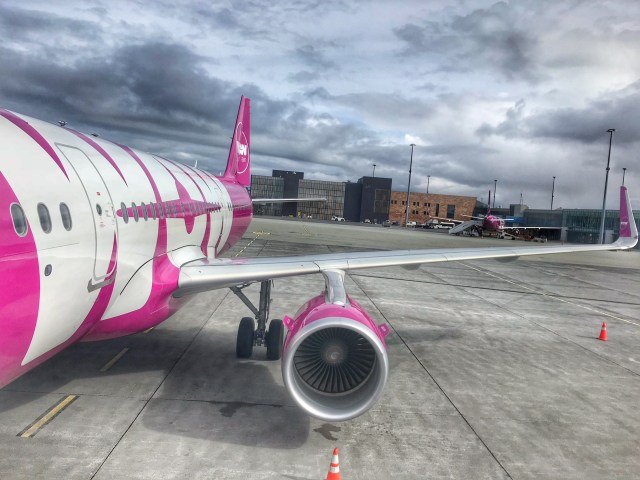
But wait! I’ve had so many people ask me about WOW, that I decided to investigate for you. (I’m a nice guy like that) Throw in a stop in Reykjavik, a few hot dogs, a waterfall or two, and we have a weekend adventure! WOW now operates out of Chicago Ohare, as well as Detroit (DTW). These fares are cheap, come with limited baggage allowance and random seat assignments. Both ways we flew a moderately new Airbus A321 with a 3 +3 seat configuration. Both times I ended up in the middle. I was prepared for the flight from hell, but I have to say…this wasn’t bad whatsoever. The flight over was a bit warm. The staff proved courteous and efficient. I packed snacks and a water bottle, so I didn’t need to purchase anything on the 6 hour flight to Reykjavik. (water was priced at $3.25) which is similar to airport prices and not overtly horrendous. My backpack the SwissGear Travel Gear 597 Packed with weekend essentials came in at 14lbs or so. My bag fit easily, and caused no problems. We were set to land in Reykjavik just before 5 am.
Landed! and exactly what kind of trial run would it be if potential disaster didn’t strike?! Expectations exceeded for the flight over, and feeling a bit sweaty from the middle row passage over, I eagerly departed the plane and made my way to line for customs. The line is long, its 4:50 am, and i’m ready for a shower. I’m getting my proverbial ducks in a row for passport control and I go cold. Starting from my spine and soon radiating throughout my whole body cold.
Where the fuck is my passport??
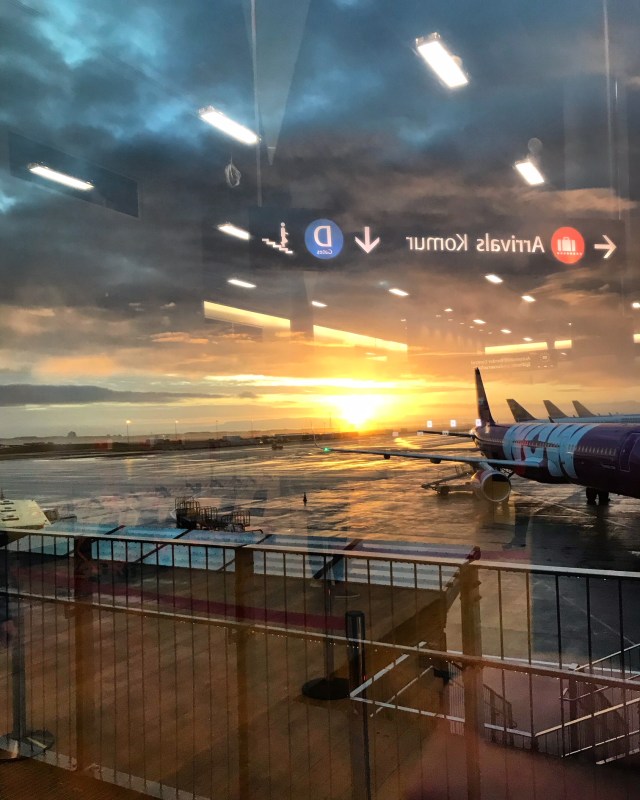
My poor battered, beaten, and glory giving passport….sweet Jesus, I must have left it on the plane! I notify my friend and tear out of line, hoofing it back toward where we had entered the airport. Of course we cant get back there, So the “service counter” must be located in a panicked rush. (I’m telling this story, so that you know, even frequent travelers encounter snags of their own making…like my forgotten iPad incident from a while back) I find WOW air agents at the service desk, explain my plight, and knowing how cheap my ticket was expect sheer calamity… And I am once again pleasantly surprised! The agents were nice, chatty and understanding. I waited 15 min or so, and I soon had my passport returned, even with enough time to glance the Icelandic sun rise.
what a day of victory!
Shuttle into the city (the airport is 45 min away from the capital of Reykjavik)
and we are ready to go! Now remember, Iceland is a small country population wise, and are proud of their long Viking tradition. The Icelandic language is fascinating to hear, and is largely unchanged over the previous thousand years. We knew we were going to hit the city, and then soak up the jaw dropping scenery a shortish trek from the capital.
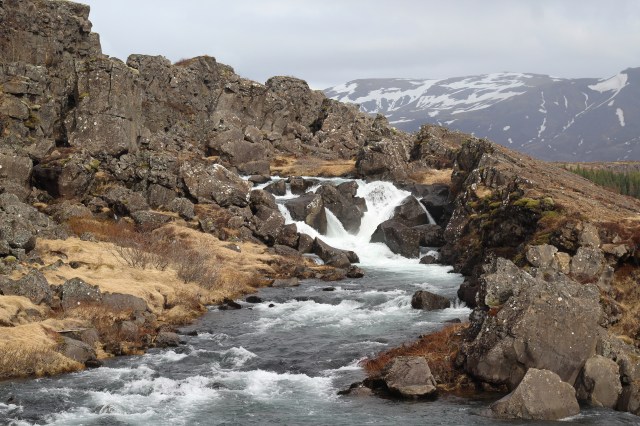
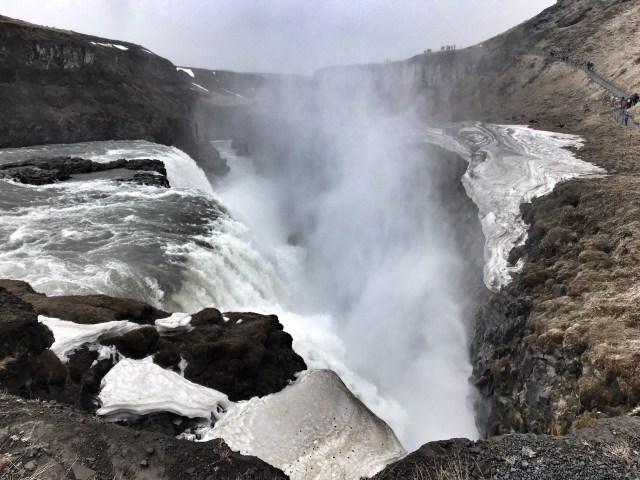
Savage nature abounds for this tiny and amazing nation. This weekend included mountains, glaciers, waterfalls, geysers, and even a Continental rift!
I have long thought of travel as therapy. I expounded more on this here 7 more days…Travel to soothe the soul Putting miles under foot, and absorbing these landscapes did grant me a sense of clarity. This trip was short, but I felt a sense of renewal by the time of the flight home.
How can one not marvel at such a sight? Standing here, experiencing the layers and complexities that exist in the natural world. This moment alone made the entire run “worth it”.
Words of course simply cannot do these landscapes justice. Just give you a teaser for what is awaiting you. You can even go back a few times, and be stunned each and every one of them.
A full day of exploring brought us back to the city for Fish n chips and few beers.
Thinking back over this weekend, There is a sense of accomplishment. I give final exams this week, and wrap up my 7th year in the classroom. I am unsure what lies ahead. This is the season of conclusion, and of course then by default also a season of beginning. You wake up in Chicago, Reykjavik, lose an hour, gain hours, etc etc. I woke up in Iceland, knowing I was leaving that day. That feeling of packing, of thinking over exit logistics. I’ve woken up in countless hotel rooms, apartments, houses, hostels etc, and known that feeling. This particular segment is over. the hope that there will be renewed adventure in the future, but feeling thankful you had at least one more go of it.
Nothing on the road is perfect, and expecting it to be so is rather greedy. Its all in the experience. I was quite impressed in the performance of WOW air, and no longer have a wary feeling about using them. Iceland as always proved thrilling and other worldly. Thank for coming with me once again.
Super stoked to announce that I was able to sit down for a chat with NPR local station affiliate WMUK 102.1! I made the short trek over to Kalamazoo, to sit with Zinta Aistars, for the Between the Lines program. This program focuses on writing and the creative. The hour I was in the studio seem to blast by. The link is live and up now.
This was so much fun! Zinta’s interview style is easy and engaging. She picked a great picture for the cover of the piece. Me, eyeballs deep in the mighty chicken fish, the local legend of the hawker stalls of Kuala Lumpur.
We chatted motivation, culture, history, writing, the blog, and a few things in between. I’ve been waiting to announce this, and find this timing perfect, as I leave for Iceland on a twisted weekend adventure this week! If you dont remember that story is here: A Note on Spontaneity
Listen to the interview if you need a smile on your way to wherever, and leave me some Monday motivation! Hopefully not the last time I find myself on the airwaves. I would love feedback.
There will always be a thousand excuses not to. Some more pliable than others. Is it the perfect time? Probably not. Do you have wads of disposable income with no other designated purpose than making you smile? Probably not. On the flip side, however, do you need to eat out 3~ days a week? Probably not. Lease and drive a new wanker mobile? Most likely not. Do you really need that 5$ a day latte habit? Certainly not. Do any of these things actually make your life better?
Find a way, buy the ticket, take the ride. adventure is the one purchase that will always make you richer. Set the goal, embrace the unknown, and love taking the plunge. Love yourself enough to say “Lets do this”! Even if this means finding yourself post leap, hurdling toward certain disaster, then at the last minute building your wings on the way down, and coasting into bliss. I’ve never encountered anyone, late in life that said “I wish I didn’t adventure as much” or “I wish I would have spent more time at the office”…because that shit simply does not exist. This is your life, and its ending one minute at a time. Why are you wasting these precious minutes on shit relationships, craptastic jobs, or toxic friendships? There is a freaking world out there to discover. Literally billions of people, crazy flavors, insanely great cultures, traditions, and collective experiences.
I want to help you. In fact, I am dedicated to helping you. In this vein, I want you to maximize those travel dollars and inspire you to get up, get moving, and get into having your mind blown. I have posted about some crazy airfare deals in the past, its one of the main pillars for cheap travel. In recent years there’s been a monsoon of activity for the LCC (Low Cost Carrier) segment. What is this all about?
Funny you should ask.
I will take the plunge for you. I’ve just booked 200$ (USD) roundtrip flights to Iceland…for a weekend…Two weeks from now. This is exam season, and I don’t have a ton of time. Who goes to Iceland for a weekend?! Who books transatlantic travel less than two weeks out!?
The GypsyProfessor, that’s who. I’m going to detail the experience, and let you know how twisted it gets, and how bare bones it can be. Savage plastic lawn chairs aboard an airbus for 6 hours. Will it prove worth it?
This way when the next dirt cheap fare pops, you will have all the info you need to pull the trigger. Just a mini weekend run before we prep for a run through the jungle after the semester finishes!
This piece appeared in Jacobin roughly this time last year. Being a student of pedagogy and learning strategies…as well as a lecturer, I found that I spent quite a bit of time going over this.
What do you think?
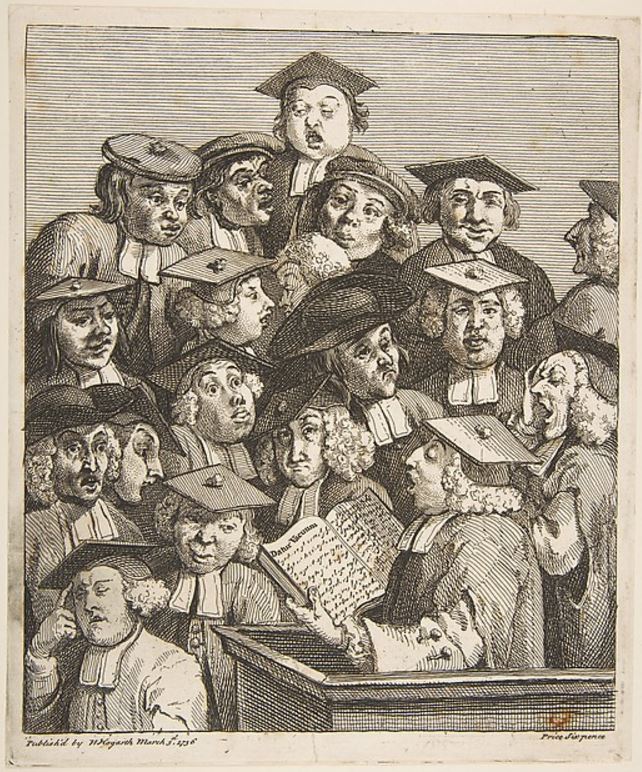
Few have savaged lecturers as brutally as the the Enlightenment-era printmaker William Hogarth. In Scholars at a Lecture, the presenter reads from his prepared text, his eyes down, indifferent to his audience. The budding academics are no more impressive; those in thrall to the lecturer’s nonsense have slack faces with lolling eyes and open mouths. The others don’t offer any critique but yawn, doze, or chat idly among themselves.
In The Reward of Cruelty, the lecturer, who cannot be bothered to rise from his chair, pokes lackadaisically at Tom Nero, a criminal whose body has been turned over for dissection. The audience shows little interest. Hogarth’s most damning image of a lecturer, however, depicts one who does inspire his audience, but to dubious ends. In Credulity, Superstition, and Fanaticism, a minister thunders on about witches and devils as parishioners swoon with terror. The minister’s text quotes II Corinthians: “I speak as a fool.”
Scholars at a Lecture. William Hogarth
Hogarth’s satirical prints repeat a common belief about lectures: Those who claim the lectern are dullards or charlatans who do so only to gratify and enrich themselves. The louder they speak, the more we should suspect them. True knowledge, he implies, does not come from speechifying blowhards and self-satisfied experts, but from practical observation of the world.
This distrust has now spread to the lecturer’s natural habitat, the university. Administrators and instructors alike have declared lecturing a stale teaching method and begun advocating new so-called content delivery techniques, from lab- and project-based learning to flipped classrooms and online instruction, that “disrupt” the sage-on-the-stage model. While these new methods work well, we should not completely abandon the lecture. It remains a powerful tool for teaching, communicating, and community building.
Detractors claim that lectures’ hierarchical, inflexible, and unidirectional structure doesn’t suit our dynamic, crowd-sourced world. To be sure, lectures are top-down affairs that occur at fixed times. But these aspects are assets, not weaknesses: they benefit both students and instructors.
Lectures are not designed to transmit knowledge directly from the lecturers’ lips to students’ brains — this idea is a false one, exacerbated by the problematic phrase “content delivery.” Although lecturers (hopefully) possess information that, at the beginning of a lecture, their students do not, they are not merely delivering content. Rather, giving a lecture forces instructors to communicate their knowledge through argument in real time.
The best lectures draw on careful preparation as well as spontaneous revelation. While speaking to students and gauging their reactions, lecturers come to new conclusions, incorporate them into the lecture, and refine their argument. Lectures impart facts, but they also model argumentation, all the while responding to their audience’s nonverbal cues. Far from being one-sided, lectures are a social occasion.
The regular timing of lectures contributes to their sociality, establishing a course’s rhythm. The weekly lecture, or pair of lectures, draws students together at the same time and place, providing a set of ideas to digest while reading supplementary material and breaking into smaller discussion sections. Classrooms are communities, and typically lectures are the only occasion for the entire group to convene physically. Remove the impetus to gather — either by insinuating that recorded lectures are just as effective or by making the lecture optional — and the benefits of community disappear.
One common lament among university students is a sense of social isolationduring the school year. While lectures won’t necessarily introduce students to their best friends or future partners, they do require attendees to get dressed, leave the house, and participate in a shared experience. This simple routine can head off lonelieness and despondency, two triggers and intensifiers of depression.
Further, dismissing the value of attending lectures only encourages students to skip weeks of classes and then frantically try to catch up later, a destructive cycle that compounds loneliness with anxiety. Students not only fall behind but also miss opportunities to speak with their peers and instructors.
Like a metronome, lectures regularly punctuate the week, grounding other elements of students’ lives by, for instance, encouraging regular sleep schedules and study periods, which can also reduce anxiety and stress.
Audiences outside academia clearly understand the benefits of collective listening. If public lectures did not draw sizable crowds, then museums, universities, bookstores, and community centers would have abandoned them long ago. The public knows that, far from being outdated, lectures can be rousing, profound, and even fun.
The attack on lectures ultimately participates in neoliberalism’s desire to restructure our lives in the image of just-in-time logistics. We must be able to cancel anything at the last minute in our desperate hustle to be employable to anyone who might ask. An economic model that chops up and parcels out every moment of our lives inevitably resists the requirement to convene regularly.
Critics frequently complain that lectures’ fixity makes it difficult for students to work. We should throw this argument back at those who make it: the need for students to work makes it hard for them to attend lectures. Work, not learning, is the burden that should be eradicated. Education is not an errand to be wedged between Uber shifts; it represents a long-term commitment that requires support from society at large. This support is thinning; eroding the legitimacy of lecturing makes it thinner still.
Neoliberalism has also made it hard to recognize the work students perform in lectures. Many critics dismiss lecture attendance as “passive learning,” arguing that students in lectures are aren’t doing anything. Today, declaring something passive completely delegitimizes it. Eve Chiapello and Norman Fairclough argue that activity for its own sake has become essential to personal success: “What is relevant is to be always pursuing some sort of activity, never to be without a project.” Indeed, in our constant scramble to project adaptable employability, we must always seem harried, even if our flailing about isn’t directed toward anything concrete. Without moving around or speaking, lecture attendees certainly don’t look busy, and so their activity gets maligned as passive, unproductive, and, consequently, irrelevant.
But lecture attendees do lots of things: they take notes, they react, they scan the room for reactions, and most importantly, they listen.Listening to a sustained, hour-long argument requires initiative, will, and focus. In other words, it is an activity. But today, the act of listening counts for very little, as it does not appear to produce any outcomes or have an evident goal.
No matter how fast-paced the world becomes, listening will remain essential to public dialogue and debate. As Professor Monessa Cummins, department chair of classics at Grinnell College states:
Can [students] listen to a political candidate with a critical ear? Can they go and listen to their minister with an analytical ear? Can they listen to one another? One of the things a lecture does is build that habit.
Discussion sections after lectures always reveal the expert listeners. They ask the best questions, the ones that cut straight to the speaker’s main themes with an urgency that electrifies the whole audience, producing a flurry of excited responses and follow-up questions. Good listening grounds all dialogue, expands our body of knowledge, and builds community.
Although they probably haven’t thought about in these terms, many of the lecture’s critics would probably favor one side of Aristotle’s scheme of knowledge, which separates theory from practice. Historian Pamela H. Smith succinctly describes the difference: theory (episteme, scientia) describes knowledge based on logical syllogism and geometrical demonstration. Practice (praxis, experientia) encompasses things done — like politics, ethics, and economics — or things made — technē, which require bodily labor.
Before the modern era, technē was widely denigrated. Smith writes, “Technē . . . was the lowly knowledge of how to make things or produce effects, practiced by animals, slaves, and craftspeople. It was the only area of knowledge that was productive.” Today of course, the tables are turned; technē’s productive quality elevates it above supposedly impractical theory. Indeed, under capitalism, anything that doesn’t immediately appear as productive, even if only in the most superficial way, is dismissed as a waste of time.
Good lectures build knowledge and community; they also model critical civic participation. But students have suffered a wide variety of bad lecturers: the preening windbag, the verbatim Powerpoint reader, the poor timekeeper who never manages to cover all the session’s material. Lecturing does not come naturally and can take years to master, yet very few instructors have the opportunity to learn how to deliver a good lecture. Given the outsize emphasis many universities place on publication and grants — not to mention the excessive workloads, low pay, and job insecurity the majority of instructors face — lecturers have little incentive to invest the time and effort it takes to gain these skills.
Meanwhile, active learning partisans sometimes overlook the skill it takes to conduct their preferred methods effectively. Becoming a good lab instructor, project facilitator, or discussion leader also takes time and practice. In addition to bad lectures, I’ve sat through plenty of bewildering labs and meandering seminars. Because these teaching methods have the guise of activity, however, their occasional failures are not dismissed as easily as those of the supposedly passive lecture.
Lecturing is increasingly impugned as an inactive and hierarchical pedagogical method. The type of labor demanded in the lecture hall — and the type of community it builds — still matters. Under an economic system that works to accelerate and divide us, institutions that carve out time and space to facilitate collectivity and reflection are needed more than ever.
It’s almost Easter, which is a pretty good time to get reborn, if you ask me. Especially if you’re a writer. What do I mean by that?
Every writer as a creative entity “dies.” And every writer, in a manner of speaking, must be resurrected. If you choose to ignore or avoid this fact, it could be mean the end of your art and even, possibly, your life.
Let’s unpack this a little.
Every writer dies
To create is to suffer. Just ask any mother. It is a painful, grueling task of bringing new things into existence. This is why, among many reasons, there is an unmistakable sadness to most creatives, even God.
And this is also why writers commit suicide, why painters cut their ears off, and why actors go through serial divorces. Creativity is a hard business.
There is an inherent frustration to it. And if you don’t know what to do with the inevitable pain, it could be the end of you. (It was for Hemingway.)
Ironically, those who destroy themselves never learn to die — they don’t know how to grieve loss and let go of past seasons. Are you struggling to let go and reinvent yourself as a writer and an artist?
Every writer must be reborn
When you write, you share a piece of you with the world. You put your very soul on display for all to see.
Sometimes, the world doesn’t reward creativity. Sometimes, it stones prophets and crucifies saviors. Sometimes, the world scowls at genius and scoffs at insight.
Every creative has critics, and every critique is an arrow. There is no getting around this. Creating is painful, and every writer gets wounded. In order to move out of wounded-ness (“My God, why have you forsaken me?”), we must face the injustice of unfair criticism, and heal.
We must get reborn and become whole again.
The art of practicing resurrection
This is the season in which we celebrate the resurrection of Jesus. Even in non-Christian contexts, the earth is teeming with rebirth. It’s hard to ignore.
Trees are budding. Flowers are sprouting. All of creation is collaborating to share one message: New life is here.
I struggle with these cycles — the ebb and flows of the seasons. My creative self wants to camp out in the wilderness, to to sulk in its travail. It’s been hurt, and it wants to wallow in its pain. It’s scared of trying again.
Currently, I’m coming out of a season of death — of letting go of what once was familiar and beginning to walk in newness of life. But I’m taking these first few steps slowly.
There is grief that needs to happen — losses to be mourned, disappointments to be acknowledged. We must grieve before we can move on. We must acknowledge what was before we can welcome what will be.
Death before life
We writers must acknowledge failure. We must come to grips with death. And we must practice resurrection. There is hope beyond the story of a tragic hero. There is health. There is freedom.
If this describes you (and it might), I hope you can move out of the pain of dwelling of what’s been lost and start creating beautiful art once again. It begins with honesty — with acknowledging the rejection you’ve experienced without excuse or justification.
As an exercise, try writing it all down. Then, if you’re comfortable, give it to God. Receive healing. And welcome a new day. Like I said, this is a great time to get reborn.
My routine has been rocked a bit, and a few significant changes have surfaced, and my goals for publishing suffered a bit.
If we remember from way back when (a few weeks ago) I wrote to you about an epic euro road trip. Here; Road trip…euro style. Traveling with dear family friends, Sixt bestowed upon us a new minty champagne gold Jaguar in which to dominate the French countryside.
After the spirited slog to Normandy (destination Bayeux), we settled into what I can only describe as coastal French greatness. The small cafes, the cozy atmosphere, the overcast weather, red wine, and a tremendous apartment made for an excellent overall ambiance. For those dead set on Paris, do take a multi day trip to Normandy, or scrap Paris altogether and swap the bustle for this overlooked slice of authenticity.
Secretly, everyone loves some aspect of France. No matter what they say. The quaint small towns, the endearing landscapes, and especially the food…for the love of all things holy, take a trip to small town France for the food alone. Thank me later. (Most likely when proper cheese drunk)
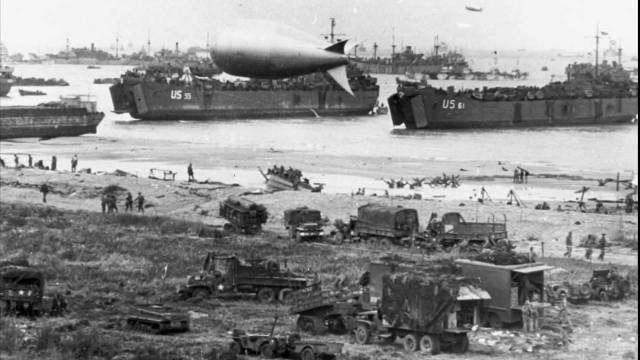
Inevitably, coming from the United States, one can simply not separate this region from it’s prominent role in the Second World War. These beaches hosted the D-Day invasion on Tuesday, 6 June 1944. These events would eventually free Western Europe from the Nazi Jackboot, and hasten the collapse of the Third Reich. Allied causalities topped 10,000 troops in this gigantic effort. The cemeteries and memorials are somber if not inspiring monuments to those fallen. When you take a day trip there, don’t plan anything significant afterwards. Walk the beaches, be with those close to you, and think about what happened here.
Soldiers, Sailors and Airmen of the Allied Expeditionary Force: You are about to embark upon the Great Crusade, toward which we have striven these many months. The eyes of the world are upon you. The hope and prayers of liberty-loving people everywhere march with you.
Your task will not be an easy one. Your enemy is well trained, well equipped and battle-hardened. He will fight savagely.
But this is the year 1944! The tide has turned! The free men of the world are marching together to victory!
I have full confidence in your courage, devotion to duty and skill in battle.
We will accept nothing less than full victory!
Good luck! And let us all beseech the blessing of Almighty God upon this great and noble undertaking.
—Gen. Dwight D. Eisenhower, Supreme Allied Commander, 6 June 1944.
Few other experiences force you to gain a certain kind of necessary perspective. When I initially imagined this run, I crafted it as a kind of therapy. I wrote about that here 7 more days…Travel to soothe the soul . Walking this cemetery, dwelling on the sacrifice, suddenly I wasn’t thinking about office politics back home. I wasn’t thinking about the stock market, our loony president, or grading exams. I was thinking about the people with me, however, how much they meant to me, and how I would remember this time for decades to come. Perhaps part of that is why I initially shied away from writing about this for a public audience. Felt too real, I had to sit with it for a bit. Delve back into “daily life” and remember that day.
A day spent on the north coast of France is fraught with feeling and realization. I am a firm believer that we all need this. A reminder that we only have so many “fucks” throughout the course of our day, and how we prioritize these fucks is of key importance. Don’t waste your fucks, because they are finite, and needed for the actually important aspects, people, and passions in your life.
“My mission in life is not merely to survive, but to thrive; and to do so with some passion, some compassion, some humor, and some style.” Maya Angelou
Next up, Its time for Mt Saint Michelle, and a twisted trip through Champagne country.
This came across my browsing this morning. Ford already had some plans for Corktown announced last year. This could be something quite awesome. What do you think?
Detroit is one of my favorite cities… on the planet.
From our friends over at Cranes Buisness journal (photos my own)
Sources: Automaker in talks with Morouns’ Crown Enterprises over dilapidated Detroit building
Ford has bought The Factory nearby to house about 200 employees
Former train station has been empty for about three decades
Chad Livengood/Crain’s Detroit Business
The 104-year-old Michigan Central Station has sat vacant since 1988. Numerous efforts to redevelop the hulking Detroit landmark owned by the Moroun family have failed to come to fruition over the years.
Ford Motor Co. is in discussions to purchase the dilapidated Michigan Central Station in Detroit’s Corktown neighborhood just outside of downtown, Crain’s has learned from multiple sources familiar with the negotiations.
The exact status of negotiations is unknown. But two sources familiar with the matter said a deal for the Dearborn-based automaker to redevelop the 500,000-square-foot former train station off of Michigan Avenue owned for decades by the Moroun family could come as soon as next month.
If a deal comes to fruition, it would mark Ford’s biggest step back into the city where it was born, three months after announcing that it was going to put more than 200 employees just down Michigan Avenue in The Factory at Corktown building. A redeveloped train station could house more than 1,000 workers, depending on the layout.
“At this time, Ford is focused on locating our autonomous vehicle and electric vehicle business and strategy teams, including Team Edison, to The Factory in Detroit’s historic Corktown neighborhood,” Ford spokesman Said Deep said Monday in a statement to Crain’s. “While we anticipate our presence over time will grow as our (autonomous/electric vehicle) teams begin moving downtown in May, we have nothing further to announce at this time.”
A redevelopment of the depot, which has been abandoned and blighted for three decades since Amtrak stopped service in 1988, would be one of the most expensive and complex local undertakings in recent history, development experts familiar with the property have said in recent months.
Michael Samhat, president of the Morouns’ Warren-based Crown Enterprises, said there is not a deal imminent to redevelop the train station.
“We’re always working to bring an opportunity to the train station,” Samhat told Crain’s on Monday. “When we do get a serious entity looking at it, those are details we don’t share. At this time, we don’t have any deal to report.”
Samhat said the Morouns continue to meet with different groups interested in the building, which became a symbol of Detroit’s post-industrial decline in the 1970s, 1980s and 1990s.
“Last week, we met with an entity — not Ford Motor — on the building,” Samhat said Saturday morning. “We’re not at a point to name an entity and say we’ve got a deal.”
Matthew Moroun, the son of billionaire transportation mogul Manuel “Matty” Moroun, told Crain’s last year that he has broached the idea of Amtrak trains running through the old train depot with Kirk Steudle, director of the Michigan Department of Transportation. The opening night of the annual Detroit Homecoming event, produced by Crain’s, took place at the train station last year.
Steudle said he’s receptive to the idea and connecting the old train station to the central business district in the same way the QLine streetcar system connects the New Center area with downtown.
Last year, Samhat said the Moroun family had spent more than $8 million over the past five years abating the building, constructing a freight elevator in the shaft of the depot’s original smokestack and installing 1,100 windows.
Crain’s contacted a Ford Land Development Co. spokeswoman for comment.
One source familiar with Ford’s pursuit of the train station said the move is aimed at building a workplace in an urban setting that can attract younger workers to the automaker.
Ford officials, including Executive Chairman Bill Ford Jr., have said talent attraction was a driving factor in the company buying The Factory building and embedding a team of employees focused on developing the business strategy for selling electric and autonomous vehicles of the future.
“Our young people love … living and working in urban areas,” Bill Ford Jr. said in January at the Detroit auto show.”
Here we go, a lesson from over the pond. A few of our states are showing promise in the K12 scene… progress is long overdue. The American Higher education scene has been bled out.
Why I’m a striking lecturer: I want to stop the slow death of public education
On the picket line I’ve seen how much widespread support there is, by those fighting against broader attacks on education
‘Under the ‘defined contribution’ scheme, the typical lecturer would lose about £10,000 a year in retirement.’ Photograph: Jeff J Mitchell/Getty Images
Iam a lecturer, currently on strike. I am also a part-time MA student, whose lecturers are on strike. And I am the mother of a student whose lecturers are on strike. There have been attempts by many vice-chancellors to pit students and their parents against striking staff, often by positioning staff as selfish and greedy, and students as the consumers whose livelihoods they harm. But even though I dread the hole in my next pay packet, and know exactly what it is like to see classes disappear when I have an essay to write, and though I feel for my daughter, who worries about the impact this will have on her degree – and therefore her future – for me there has been no moment of doubt, no internal war.
This unity of purpose is mirrored on the picket lines, where the active support of students has made even the coldest days feel like high summer. They arrive at 8am daily to brew us “solidari-tea”, they make banners, art and music, they occupy buildings, and march alongside us, even in heavy snow. And the support is broad: a YouGov poll conducted on the eve of the strike showed that 61% of students supported it, and only 2% blamed the strikers for the disruption to their studies.
The issue that has led to this dispute is pensions, and yet large numbers of casualised staff are on the picket line too – part of a growing cohort of young academics for whom the only jobs on offer are paid hourly, and meagrely, with no security and very little opportunity to do research. Viewed from the precarious position of many staff and most students, pensions of any sort must seem like an impossible dream. So why do the majority of them support us?
Partly, because they can see the injustice. Often presented as if a gift, like some fat cat’s golden handshake, pensions are in fact part of our pay. People who choose to teach in universities do so because they believe that teaching and research are a public good, and worth doing in return for modest pay and a decent pension. So when the vice-chancellors, represented by Universities UK (UUK), announced their intention to switch from a “defined benefit” scheme to a “defined contribution” scheme, the betrayal was keenly felt.
Under the “defined contribution” (aka “die quickly”) scheme, the typical lecturer would lose about £10,000 a year in retirement. It is a deeply cynical move by people with vested interests, which if successful, would mark the end of higher education as a public service.
Why are university staff striking?
Show
The fact that the majority of vice-chancellors involved have now publicly distanced themselves from UUK’s position, including Oxford, Cambridge, and others who appeared implacably hostile to the strikers’ demands only days ago, is a sign of the weakness of their argument, as well as the strength of the strike. Many universities have expresseddismay at how their own contribution to UUK’s “consultation” was presented. UUK also claimed that defined benefits have become prohibitively expensive – a claim that turned out to rest on an implausible scenario in which every university went bust tomorrow, and which has been challenged even by the Daily Mail. Meanwhile, universities enjoy record surpluses, vice-chancellors are being given obscene salaries and lavish expenses, and cash is poured into trophy buildings to make the “brand” easier to “sell”. And all while junior staff struggle to pay their rent, and students in huge debt sit in overcrowded seminars.
But, like most strikes, this one is about much more than money. My favourite banner on the picket line reads “Against the slow cancellation of the future”, a phrase popularised by the late cultural theorist, Mark Fisher. In the grip of neoliberalism, we begin to believe that there is no alternative, Fisher told us.
In universities, this slow draining of hope began with the introduction of tuition fees in 1998, and gathered pace when they were tripled in 2010. Successive governments, enthusiastically aided by overpaid senior management drawn from outside the university sector, have turned higher education into a utilitarian and consumer-driven activity that students buy in exchange for skills for the job market. The raid on pensions fits this pattern – it is an attempt to shift the risk of volatility in the market from the employer to the individual, to pave the way for further privatisation and rid universities of any remaining sense of responsibility for the long-term health and dignity of their workforces.
The real reason for the widespread support for the strike is that these broader attacks on education as a public service affect the entire academic community – the full-time staff, the casualised staff, and, of course, the students.
The problems we face – debt, increasing workloads, precarity, mental health issues – are not only shared, but systemic. Students understand that staff working conditions are their learning conditions; staff understand that students’ financial stress is an assault on their freedom to learn. On the picket lines, the conversation has not been about pensions, but how we can democratise universities, and restore them to their real purpose. Every member of the academic community knows education is potentially life-enhancing, liberating, world-changing. That is something worth fighting for.
• Becky Gardiner is a senior lecturer at Goldsmiths, University of London, and former comment editor of the Guardian
All the way from Bloomberg news. It’s been a shit time for educators across the spectrum. The breaking point may be near. High time for some much needed militancy.
Could Wildcat Teachers’ Strikes Spread to Other States?
Oklahoma and Kentucky may follow West Virginia as educators across the country take advantage of a strong economy to agitate for more pay.
By Josh Eidelson
March 6, 2018, 6:15 PM GMT+1
Updated on March 6, 2018, 11:44 PM GMT+1
The fury among low-paid teachers that triggered a wildcat teachers’ strike in West Virginia—the longest in its history—may be spreading.
Teachers across the country may soon build on the state’s example. The Oklahoma teachers’ union said it will shut down schools within months if its demands aren’t met, and some teachers said they may strike even if a deal is reached.
“The end goal is funding for public education and our core services, and if it takes us closing down schools to do that, then we are prepared and willing to do so,” said Alicia Priest, president of the Oklahoma Education Association. On Thursday, the OEA will announce a timetable that could culminate in a school shutdown if lawmakers don’t pass teacher raises, something the legislature hasn’t done in a decade. While some teachers may have been on the fence, said Priest, the two-week West Virginia strike “has given them an emboldened sense of purpose and a sense of power.”
That may not be enough for the rank and file. Some Oklahoma teachers are planning a wildcat strike of their own. Leaders from a dozen schools met last week to discuss such an unsanctioned walkout, and they plan to reconvene Wednesday to vote on a strike date. If the union’s plans aren’t to their liking, they may walk out, said Larry Cagle, who teaches advanced placement courses and is one of the organizers behind the independent effort. “We’re going to force this on the union and on the superintendent,” he said. “Teachers are ready—they are chomping at the bit.”
“A lot of people do not trust the promises made by the governor.”
Teachers have complained of low pay and poor treatment by politicians for years, breeding a high level of distrust when it comes to any new promises. In West Virginia, teachers expressed skepticism on Tuesday right up until the legislature voted to approve a pay hike bill and the governor signed it.
Nevertheless, American teachers are benefiting from a tailwind these days thanks to a tightening private-sector labor market, which brings stronger state revenue as well as alternative job opportunities, said Heidi Shierholz, who served as chief economist for the U.S. Department of Labor during the Obama administration. “The argument that the money just isn’t there, that it’s ‘blood from a stone,’ rings a lot more hollow at a time like this,” said Shierholz, who now directs policy for the Economic Policy Institute.
Hiking teacher pay may be necessary for states to stay competitive when it comes to retaining educators, said Chris Edwards, an economist at the Cato Institute. However, states that buckle to pressure from striking teachers could be hurt when the economy goes south, he added.
“If they do make big commitments, then a recession comes, then they get themselves into budget troubles,” said Edwards.
In West Virginia, the strike by thousands of school employees began Feb. 22 with the backing of the schools’ three unions, and then morphed into a rare “wildcat” walkout when teachers rejected an agreement between union leaders and the governor. Teachers said they were concerned the deal didn’t offer a concrete solution to the pressing issue of escalating health insurance premiums, and they lacked faith that the legislature would approve the 5 percent raises agreed to by Governor Jim Justice, a Republican.
“A lot of people do not trust the promises made by the governor,” striking teacher Kristina Gore said Thursday after West Virginia’s Republican-controlled Senate shunted the proposed pay raise to committee. On Saturday night, the Senate voted to approve raises of only 4 percent for the teachers, who have not had an across-the-board increase since 2014.
On Tuesday, legislative leaders and Justice announced the new deal to fund 5 percent raises. The package signed today includes a 16-month freeze on premium increases under the teachers’ health care plan, according to the state’s American Federation of Teachers local. Rather than counting on the additional revenue projected by the governor’s office, Senate Finance Chair Craig Blair said Tuesday morning that the chamber would make “very deep cuts” elsewhere in the budget to compensate for the raises.
“Teacher strikes have tended to breed more teacher strikes.”
Favorable economy notwithstanding, this year is shaping up to be a perilous one for the embattled U.S. labor movement, with the White House and Republican-controlled Congress hostile to unions and a U.S. Supreme Court ruling expected by summer that may slash their budgets by outlawing mandatory union fees in the public sector. Nevertheless, the West Virginia walkout has provided a beacon of sorts for activists who see it as the stirrings of grassroots organizing and defiance that they say the movement needs to survive. “Everybody I know is excited about this and what it shows is possible,” said former Communications Workers of America President Larry Cohen, who now chairs Our Revolution, the advocacy group of Senator Bernie Sanders, Democrat of Vermont.
If strikes break out in other states such as Kentucky, where teachers are fighting lawmakers over pay and benefits, it wouldn’t be the first time. “Historically, public-sector strikes have tended to come in waves,” said Georgetown University historian Joseph McCartin. “Teacher strikes have tended to breed more teacher strikes.” From 1945 to 1950, there were around 60 work stoppages by teachers around the country, many mounted without official union backing or legal protection. At the time, said McCartin, schools were underfunded and classrooms increasingly crowded. Teachers felt left behind amid quickening private sector wage growth in a postwar economy.
Striking school workers inside the West Virginia Capitol in Charleston, on March 2.Photographer: Scott Heins/Bloomberg
West Virginia’s example has “lit some fires” among teachers in Kentucky, said Jennifer Ward Bolander, a special education teacher there. “It’s definitely a subject of everyday water cooler conversation now,” she said. While she and other teachers are eager to avoid a strike, she said, there have been increasing rumblings about the possibility since West Virginia pulled it off.
Teachers in Oklahoma have now gone without raises for a decade. Average pay there is the lowest in the U.S., according to Bureau of Labor Statistics data. Jonathan Small, president of the conservative think tank Oklahoma Council of Public Affairs, said he expects the Republican-controlled legislature to approve a raise for educators. Small said he would support an increase of at least $5,000 a year for each teacher, at a cost of about $246 million, which could be paid for by spending down a surplus while increasing the state’s gross production tax on oil and natural gas.
Many Oklahoma teachers aren’t willing to wait. “People are talking about ‘strike’ now out in the open, and that’s been a change,” said John Waldron, a teacher and a member of the union’s legislative committee. “The groundswell right now is pretty loud.” Union leaders are hearing regularly from members who want to go on strike, and that pressure has helped force the leadership’s hand, said Waldron, a Democratic candidate for the state legislature.
In a statement, Oklahoma state Senator Greg Treat, the Republican majority floor leader, said “teachers deserve a pay raise” and that lawmakers have “repeatedly, in a bipartisan manner, passed revenue plans to fund teacher pay.” He argued that Democrats have obstructed such efforts. Minority Leader Steve Kouplen rejected the claim, blaming Republicans for driving the state into insolvency with tax cuts that don’t allow for a fully funded public sector.
The threat of a wildcat strike in Oklahoma has even split the labor movement there. Priest, the Oklahoma union president, argued that the vast majority of teachers “are on the same page” about strategy, notwithstanding a few groups “that don’t have all of the information.” Before shutting down schools, she said, the union will push for local school board resolutions endorsing school funding hikes and expressing support for teachers in the event of a shutdown. “We have an opportunity to stand together in a unified voice,” she said, “and we need to do so.”



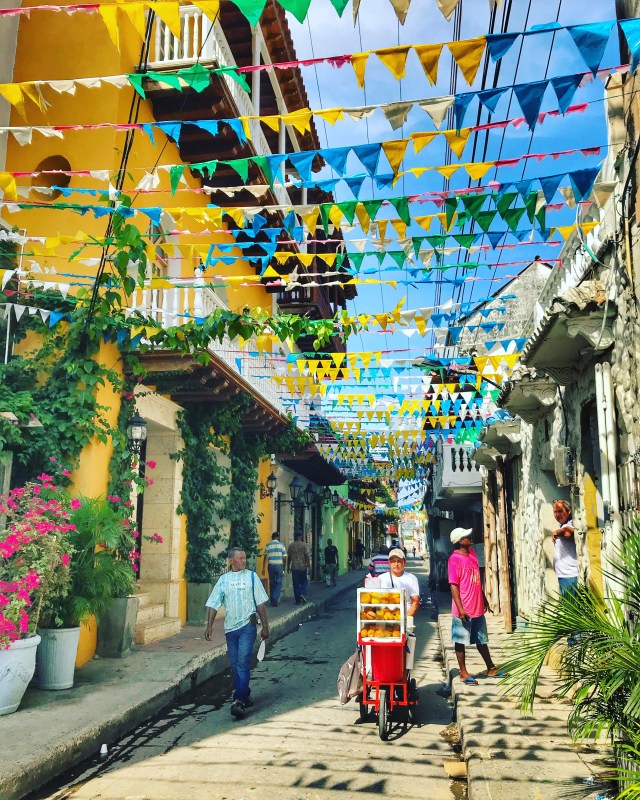 I’m happy to report that after an early morning Detroit departure and being heinously crop dusted in Fort Lauderdale by an evil old woman, I have arrived. Logged a few miles on the shoe lace express, chatted with some locals, and now completely ceviche drunk and content I will wander this city by the moon. Painting a picture of this “gem of the Caribbean”, I hope you’re ready for more.



 I have long thought of travel as therapy. I expounded more on this here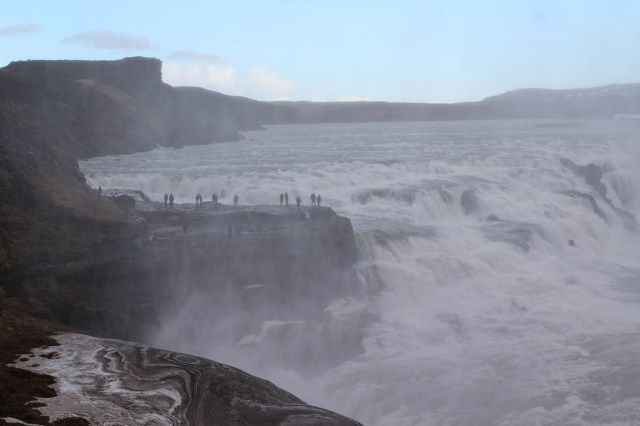



















 The Gypsy Professor